Short answer
There is one shared Fuel resource. Chop a Short Log at a Chopping Spot for 10 Firewood, then convert it at a Firewood Shed, where 2 Firewood become 20 Fuel. The Furnace, Kiln and Kitchen Oven all draw from it — but a shed only supplies stations in its own area, so you need one indoors and one outdoors.
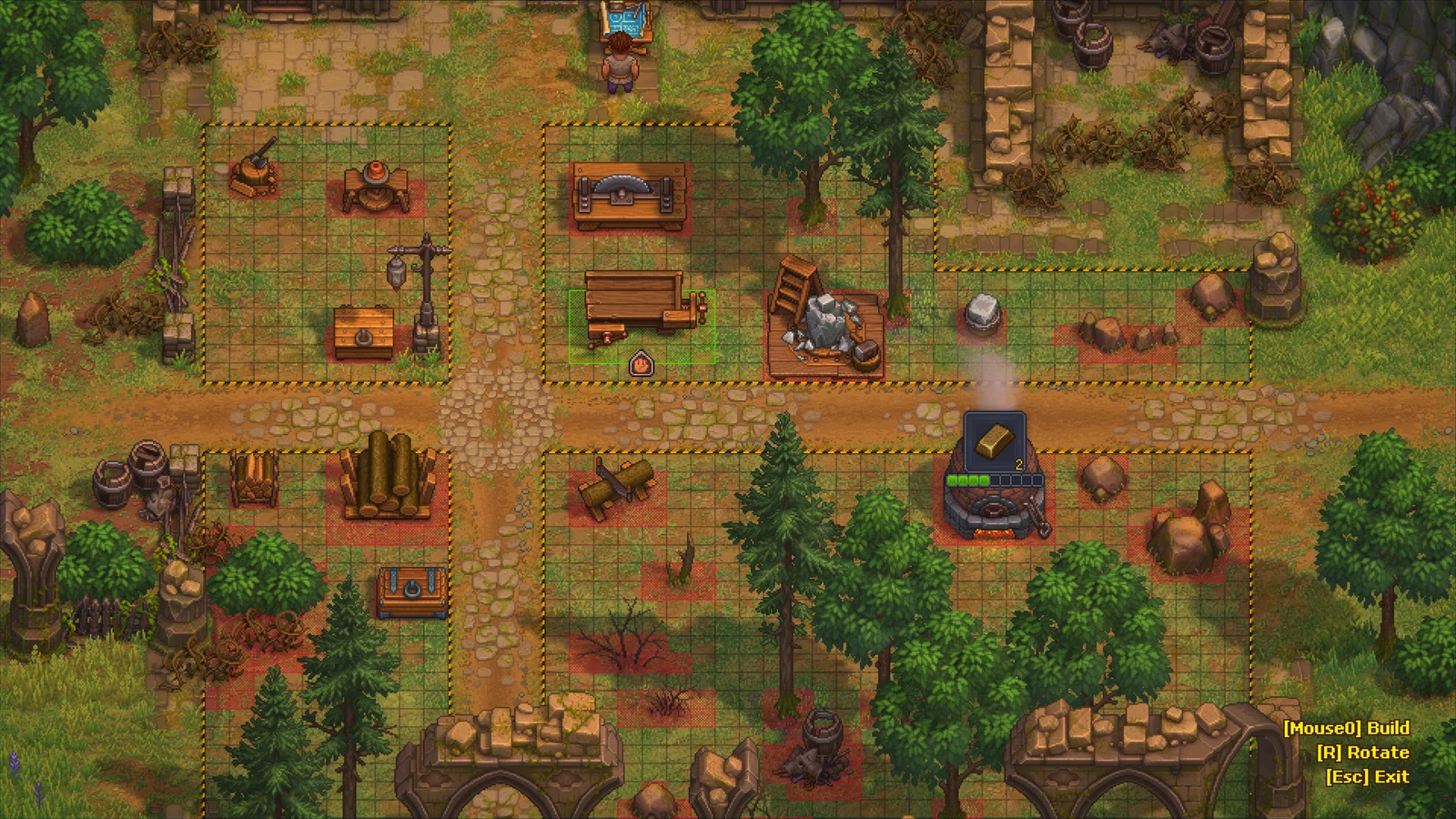
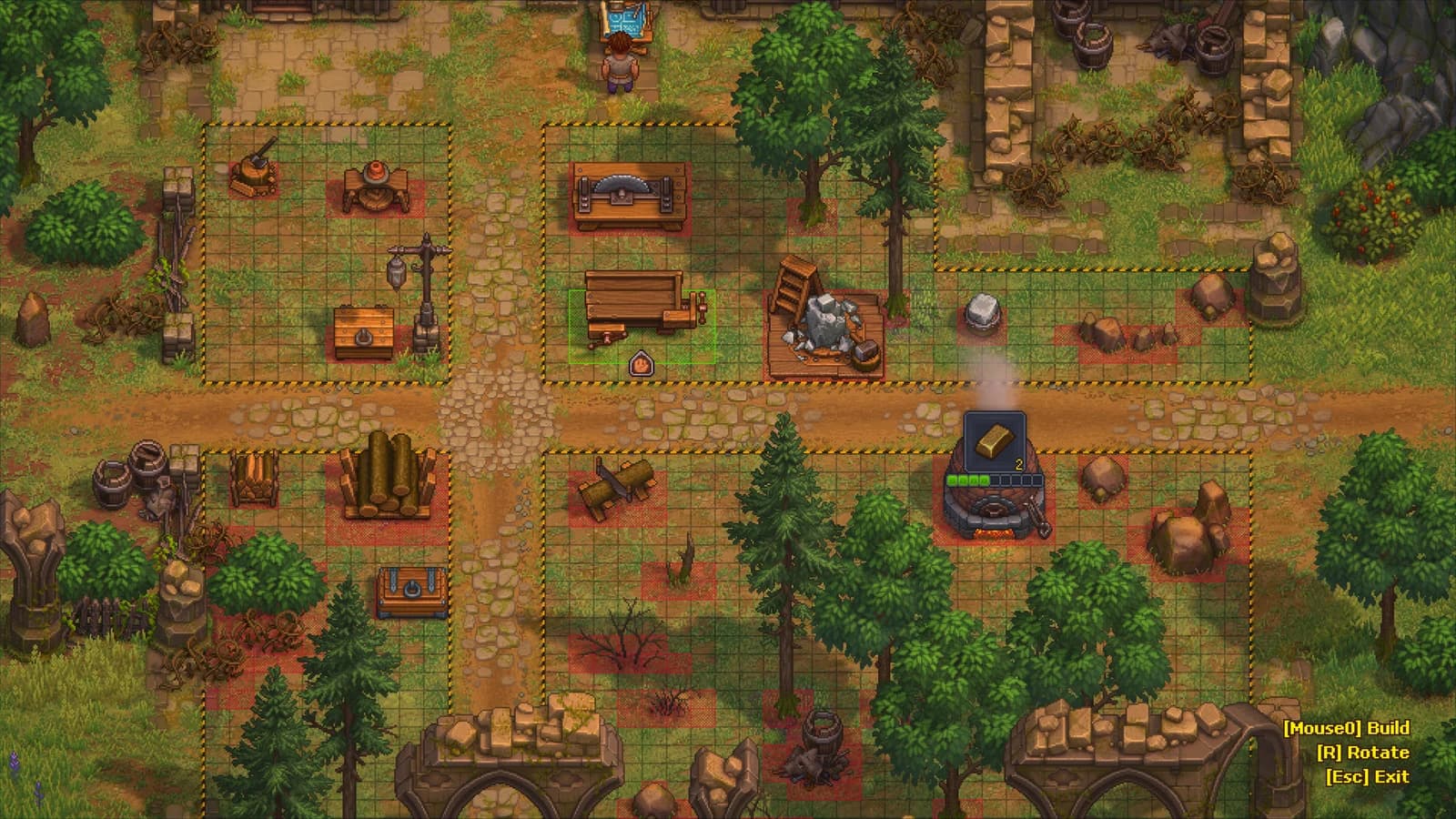
Planning the crafting yard
View full-size image ↗Official promotional screenshot · © Lazy Bear Games / tinyBuild · Official media kit · Material credits
One fuel type, three consumers
The sequel simplifies heating: there is a single resource called Fuel that powers every heat-based crafting station.
Three stations consume it — the Furnace and the Kiln in your yard, and the Kitchen Oven indoors.
The Kitchen Table does not require fuel, which is worth remembering when you are rationing.
From log to fuel
The chain starts at a Chopping Spot, where one Short Log yields 10 Firewood. Sticks can substitute for Short Logs if that is what you have.
Firewood then goes to a Firewood Shed, where 2 Firewood become 20 Fuel.
That conversion ratio is why chopping feels cheap once the shed is running — a single log goes a long way.
Unlocking the Firewood Shed
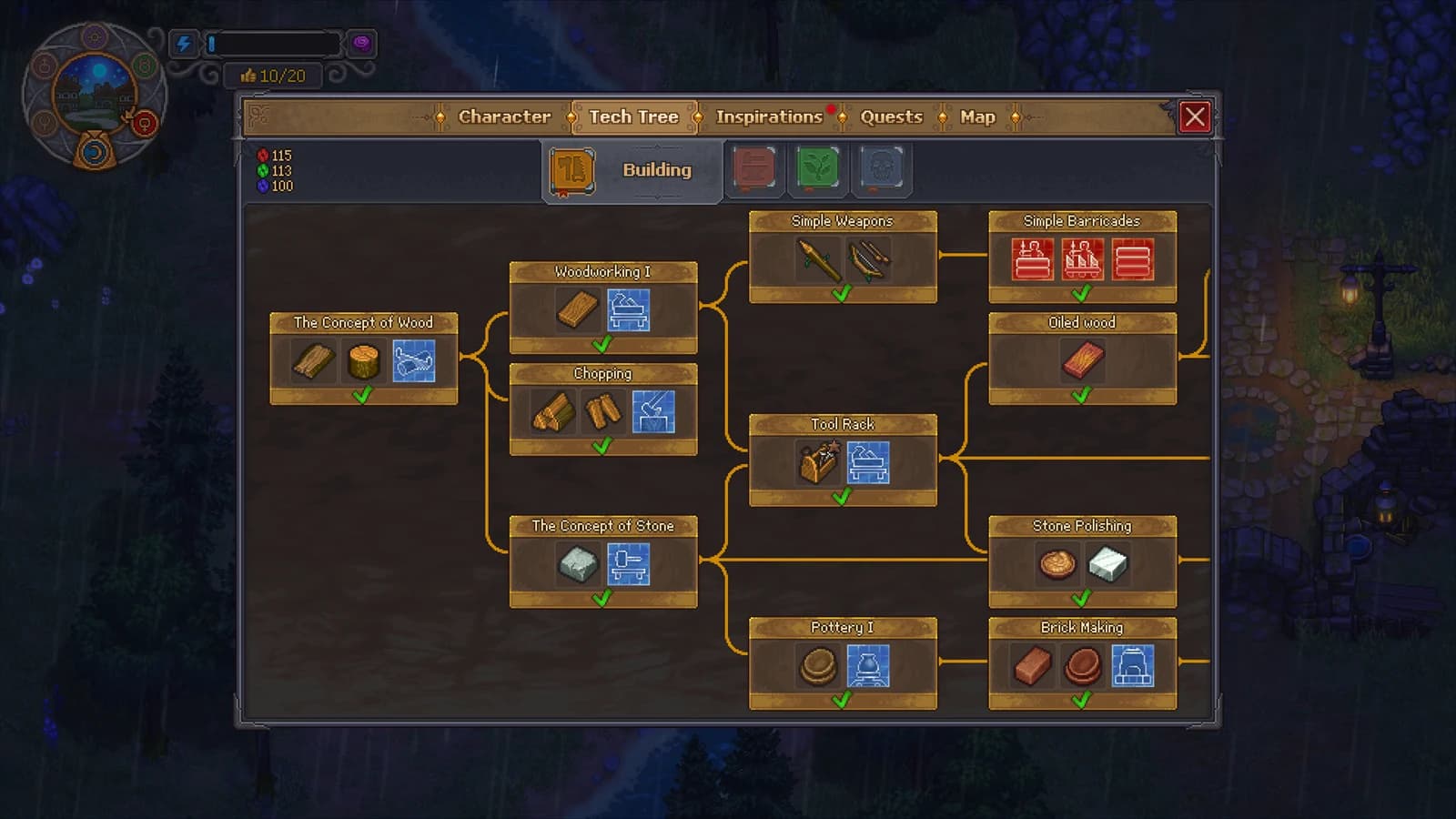
The Firewood Shed is unlocked under the Metallurgy branch of the tech tree, which is another reason to push Metallurgy early.
Building it costs 10 Sticks and 2 Bronze Nails, so get your Wooden Anvil up first to guarantee the nails.
Until the shed exists you have no Fuel at all, which means no smelting, no firing and no baking.
The mistake that stalls production
Sheds only supply the stations in their own area. An outdoor shed feeds the Furnace and Kiln; it does not feed the Kitchen Oven inside.
So you need separate sheds indoors and outdoors, and players who build only one spend a long time wondering why the oven is dead.
Plan the second shed into your base layout early rather than retrofitting it.
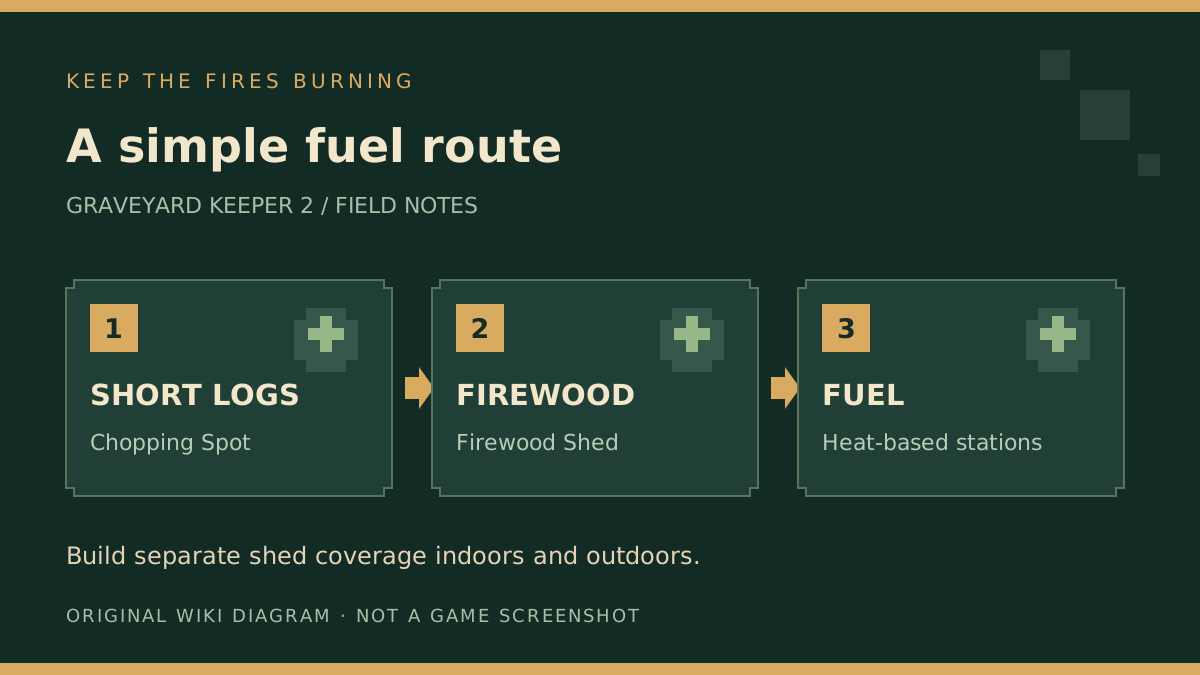
Original fuel-flow diagram. A Firewood Shed serves its own area; indoor and outdoor stations need separate coverage.
View full-size image ↗Original diagram · Graveyard Keeper 2 Wiki · editorial illustration · Original wiki diagram
Capacity and upgrades
Sheds have tiered capacity limits: Firewood Shed I holds 100 Fuel and Firewood Shed II holds 500.
The upgrade matters most once you are smelting in volume, since refilling a 100-capacity shed constantly eats your day.
Higher capacity also pairs naturally with automation — there is no point automating a furnace that keeps running dry.
Fuel and the metal chain are linked
Furnace 1 smelts Bronze Scrap or Copper Ore into Bronze Ingots, and every smelt burns Fuel.
Bronze Scrap is the cheaper input precisely because its recipe requires less Fuel than the alternative.
Meanwhile the shed that produces that Fuel needs Bronze Nails to build, so the two lines bootstrap each other — advance them together rather than one at a time.
Scaling up with zombies
Fuel demand grows sharply once production scales, because more stations mean more simultaneous burning.
Zombie workers can be assigned to gathering and crafting jobs, which is how the wood side of the chain stops eating your own time.
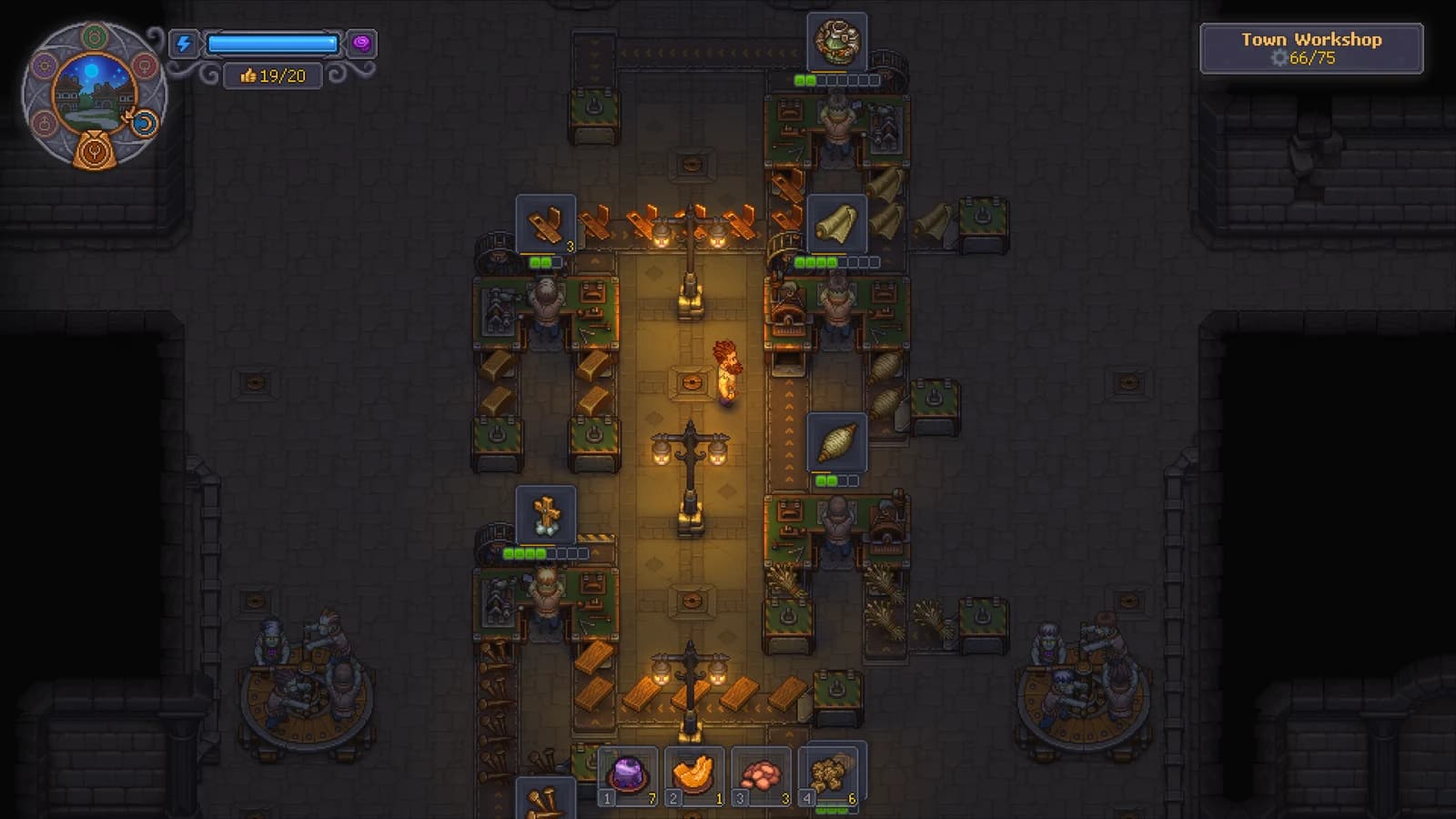
The developers also describe zombies operating semi-automatic machines in underground factories, so late-game throughput assumes a much larger fuel pipeline than your first shed provides.
Planning your base around two sheds
Treat the area rule as a layout constraint from day one rather than a surprise later.
Put one shed outdoors near the Furnace and Kiln, and a second indoors near the Kitchen Oven.
Keeping each shed close to what it feeds also cuts the walking that eats your in-game day.
If baking suddenly stops working, the indoor shed is almost always the missing piece.
Where the wood comes from
Firewood starts as Short Logs, and Sticks can stand in when logs are short.
Chopping is also one of the best sources of red tech points, which the Building and Metallurgy branches consume — so gathering fuel funds the unlocks that improve fuel.
Because one log becomes 10 Firewood and each pair of Firewood becomes 20 Fuel, a modest woodcutting session goes a long way early.
Later, zombie workers can be assigned to gathering and crafting once equipped with tools, which is how the wood line stops consuming your own hours.
A checklist when nothing will burn
First, confirm the Firewood Shed is actually built — it is a Metallurgy unlock costing 10 Sticks and 2 Bronze Nails, not a starting structure.
Second, check you converted Firewood into Fuel at the shed; raw Firewood on its own does not power a station.
Third, check which side of the wall you are standing on, since indoor and outdoor sheds do not share supply.
Fourth, check capacity: Shed I tops out at 100 Fuel, which empties fast once several stations are working.
Budgeting fuel against smelting
Fuel is a shared pool, so every smelt competes with every bake and every firing.
Bronze Scrap is the cheaper furnace input precisely because its recipe requires less Fuel than the copper route.
That makes scrap the sensible thing to burn while your shed is still the 100-capacity tier.
Once Shed II is up at 500 capacity, copper ore becomes far more comfortable as the standing supply.
Why Metallurgy comes early
The Firewood Shed and Bronze Works sit in the same branch, which means one investment unlocks both your fuel and your metal.
Red tech points, which that branch consumes, come from exactly the work you are already doing: chopping wood and mining stone and clay.
So the branch largely funds itself if you spend points as you earn them instead of banking them.
Delaying it is what creates the classic stall where you have materials everywhere and no way to process them.
What the stations actually do
The Furnace handles smelting, turning Bronze Scrap or Copper Ore into Bronze Ingots for the anvil.
The Kiln covers fired goods in the yard, and the Kitchen Oven handles cooking indoors — including Berry Pie, which restores energy and removes 3 insanity per pie.
That last one is why an unfuelled indoor shed quietly hurts more than it seems: it costs you your insanity management, not just food.
The Kitchen Table, by contrast, needs no fuel at all and keeps working regardless.