Short answer
The Town is the sequel's central project. Most of it is overrun by townsfolk who turned into zombies, so you reclaim it district by district in battle, then rebuild what you cleared — housing, cafés, shops and infrastructure. Each restoration creates new markets for your goods and unlocks products and resources you could not buy before.
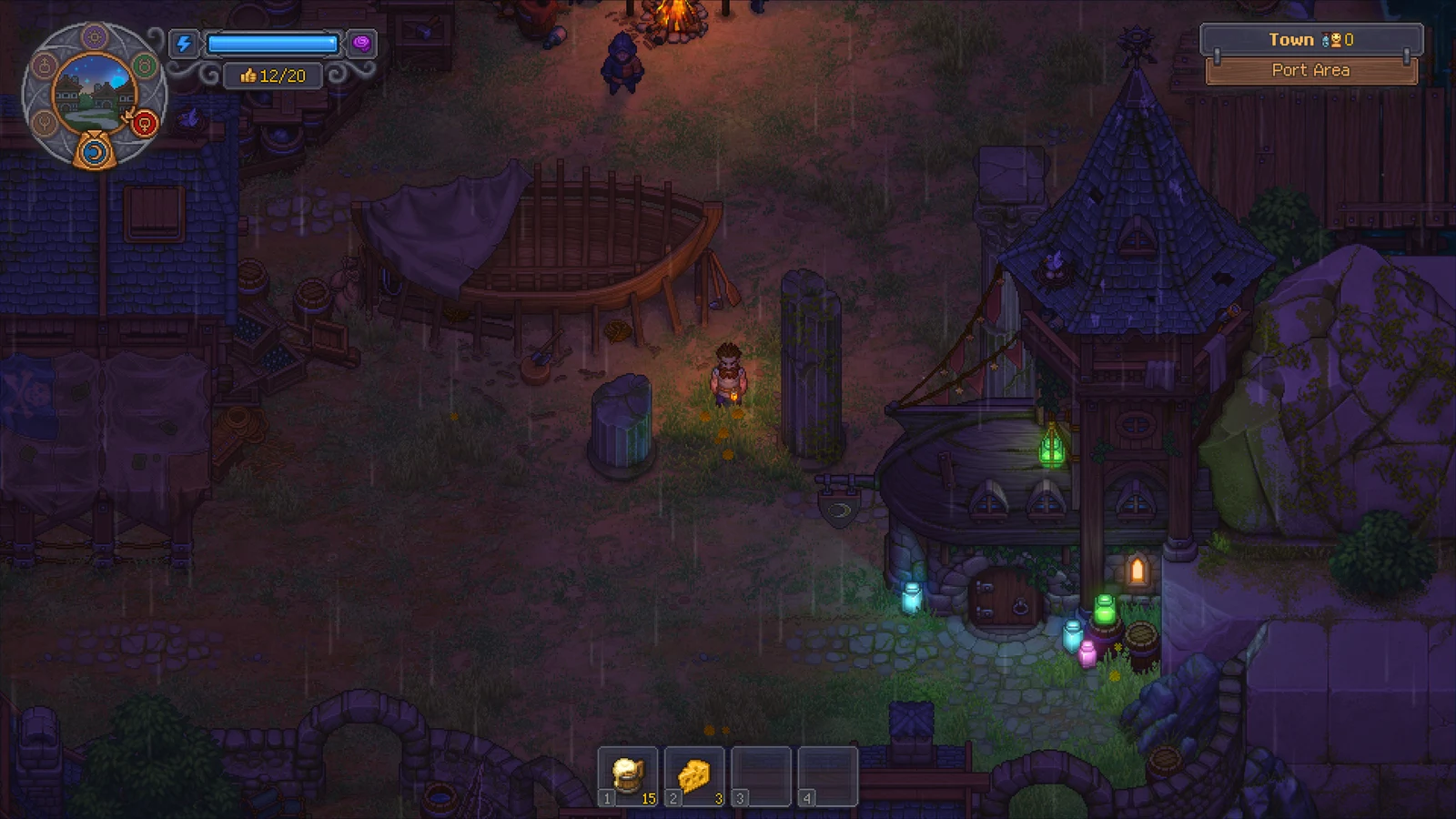
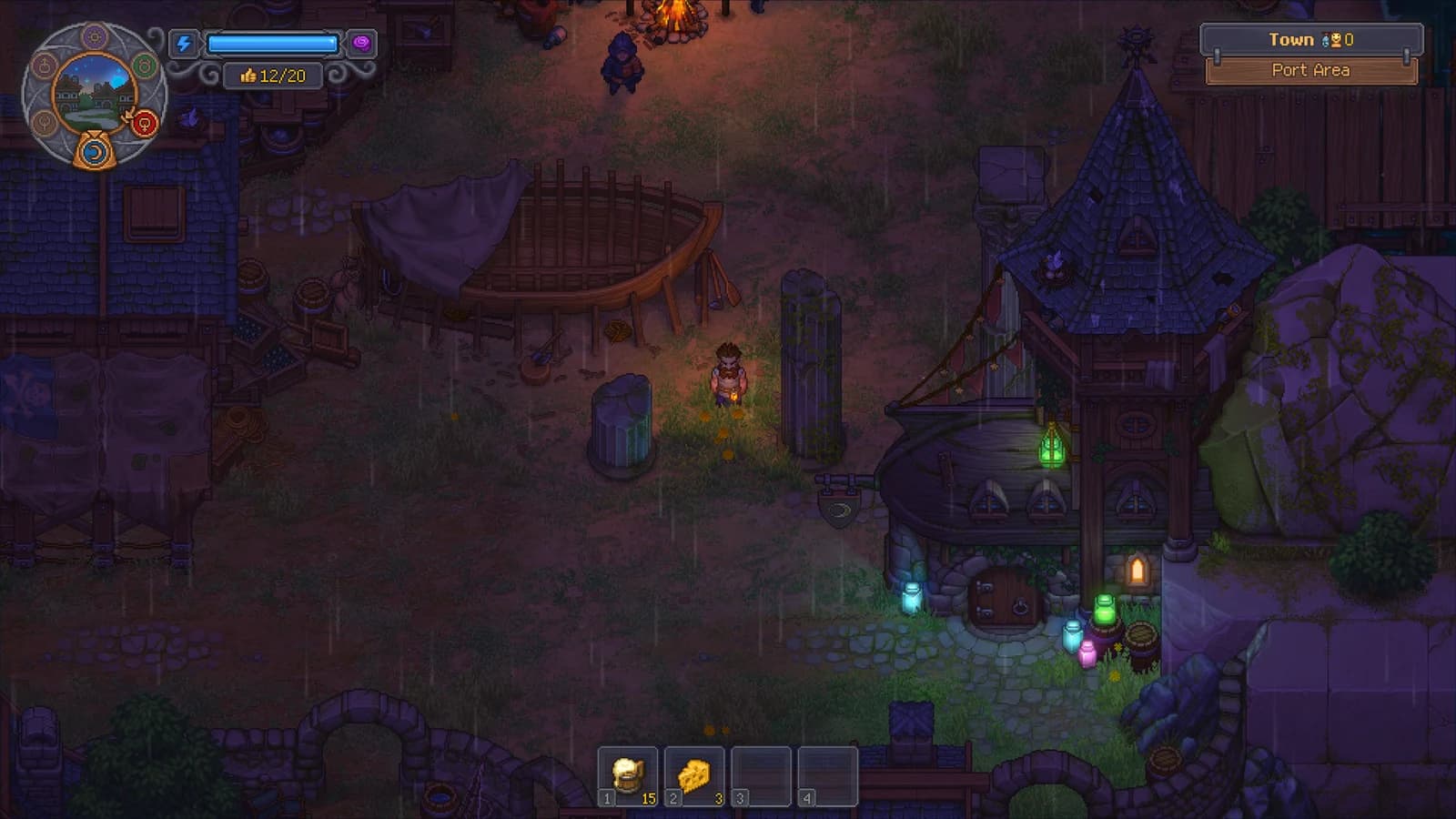
The Town harbour at dusk
View full-size image ↗Official promotional screenshot · © Lazy Bear Games / tinyBuild · Official media kit · Material credits
The place the first game never let you enter
In the original, The Town was a rumour behind a guarded gate, with the Town Pass forever out of reach.
The sequel confirms it exists, lets you walk into it, and makes restoring it your job.
It is not the city at its height. Centuries have passed since it was founded in the era of the Old Mighty God, and traces of that grandeur sit beneath a later medieval settlement that has itself eroded.
Reclaim, then rebuild
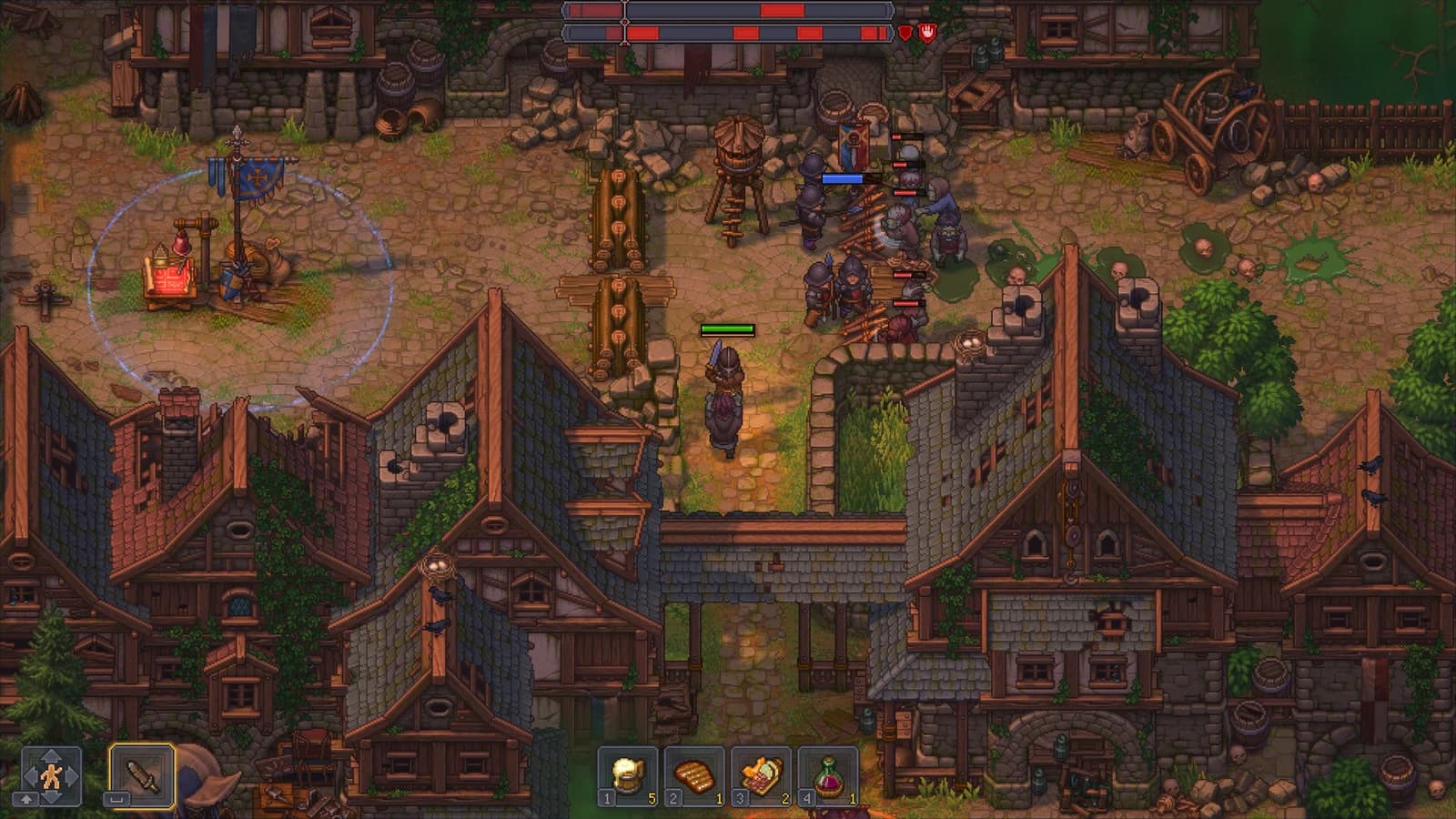
Zombies hold most of the city, so the first step for any district is combat. Battles happen on the streets themselves, not in separate arenas.
After a victory the area changes permanently: townsfolk and market stalls move in where you fought.
Then the rebuilding starts — comfortable housing, reopened cafés and shops, and local infrastructure brought back online.
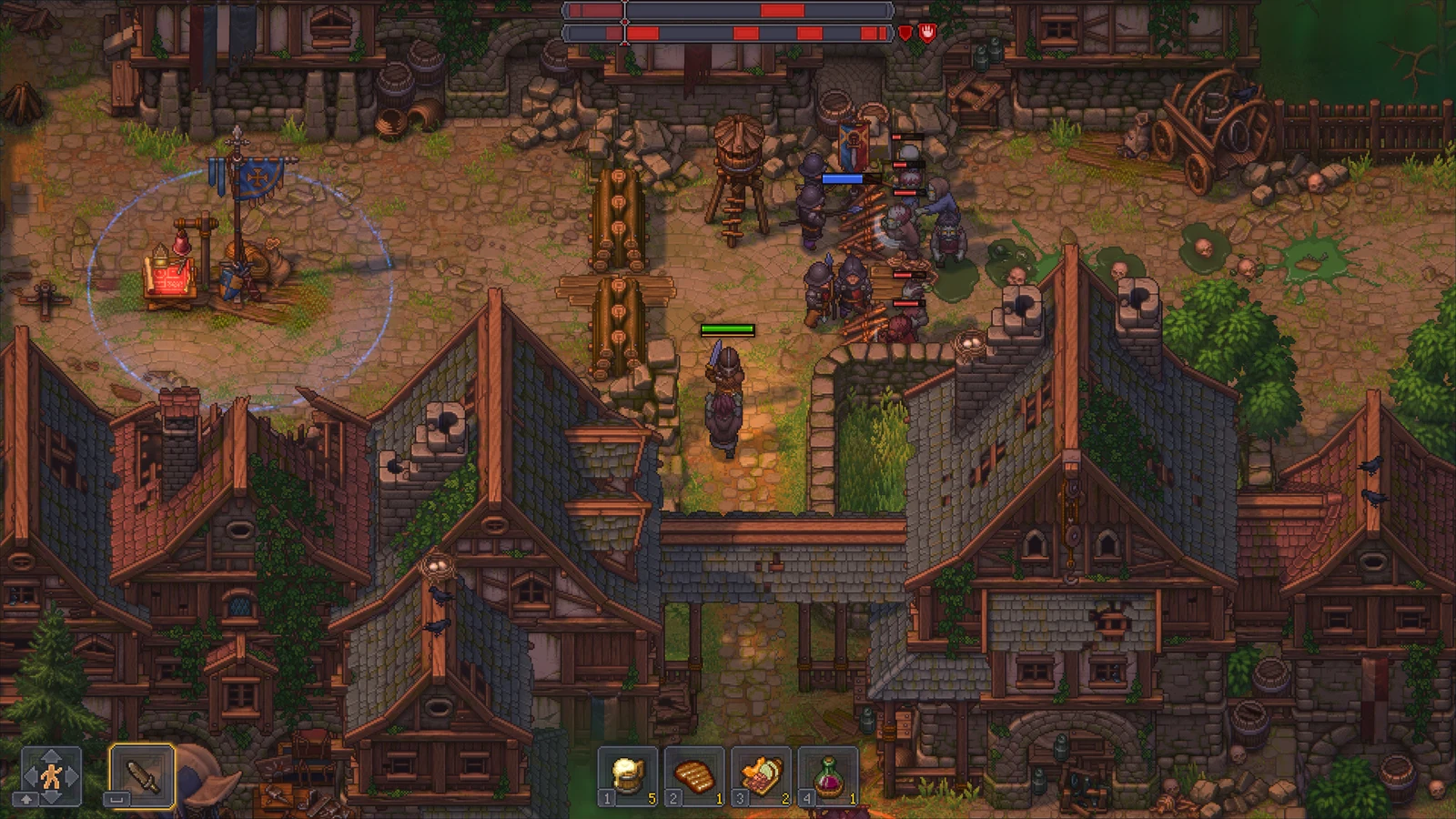
The official media kit shows fighting among the Town's buildings and barricades, illustrating the reclaim-and-rebuild theme.
View full-size image ↗Official promotional screenshot · © Lazy Bear Games / tinyBuild · Official media kit · Material credits
Your rebuild choices have consequences
At any time you can pick from several buildings and businesses to restore, and the developers are explicit that those choices matter.
Buildings do not just improve the city cosmetically. They create new markets for your goods and unlock valuable products and resources for you to buy.
That turns town planning into an economic decision: what you restore determines what you can sell and what you can source.
Zombies are not the real problem
The developers say that later you discover zombies are not the Town's biggest problem — with proper defences, people can live alongside them, and they may even become a local attraction.
The real issues are hopelessness and a lack of consumer goods, which is exactly what your production lines exist to solve.
They frame the whole arc as the Town entering an era of "Zombie Capitalism", comparing it to Europe's post-plague shift into restoration and mass production.
A bigger Town means better corpses
Burying townsfolk remains part of the job, and the size of the Town feeds directly into your graveyard.
The larger it grows, the more corpses you receive. The better supplied and more prosperous — and therefore more sinful — it becomes, the better those corpses are, with more skulls on each.
Since zombie worker quality is capped by the red-skull level of the corpse they were raised from, a thriving Town quietly upgrades your workforce.
Where the graveyard fits
The graveyard sits outside the city walls in a quiet area near your base — the developers note they are not going to make you live inside the Town.
Graveyard management gained a new layer: tech tree unlocks give you Graveyard modules that hold tombs, benches, columbaries, monuments and graves.
With new grave designs and decorations on top, the graveyard is the part of the map you personally design.
Planning around the week
City battles only run on one specific day of the week, so the rebuild advances in weekly steps rather than continuously.
Between battles, the sewers remain open every day if you want combat, and the rest of your week goes into production for the next push.
Key characters now stay at their regular locations instead of visiting once a week, but some of their mechanics remain tied to designated days.
The economy you are building
Every restored shop or café is a customer as well as a building, which is what turns town planning into supply-chain planning.
Restorations also unlock products and resources you can buy, so they widen your inputs as well as your outputs.
Traders arriving from foreign lands and refugees moving in are the visible signs of that economy coming back to life.
The developers describe the destination as an era of mass production and mass consumption — your production lines are what feed it.
Why automation belongs in the town plan
Supplying a growing city by hand is not realistic, which is where zombie workers come in.
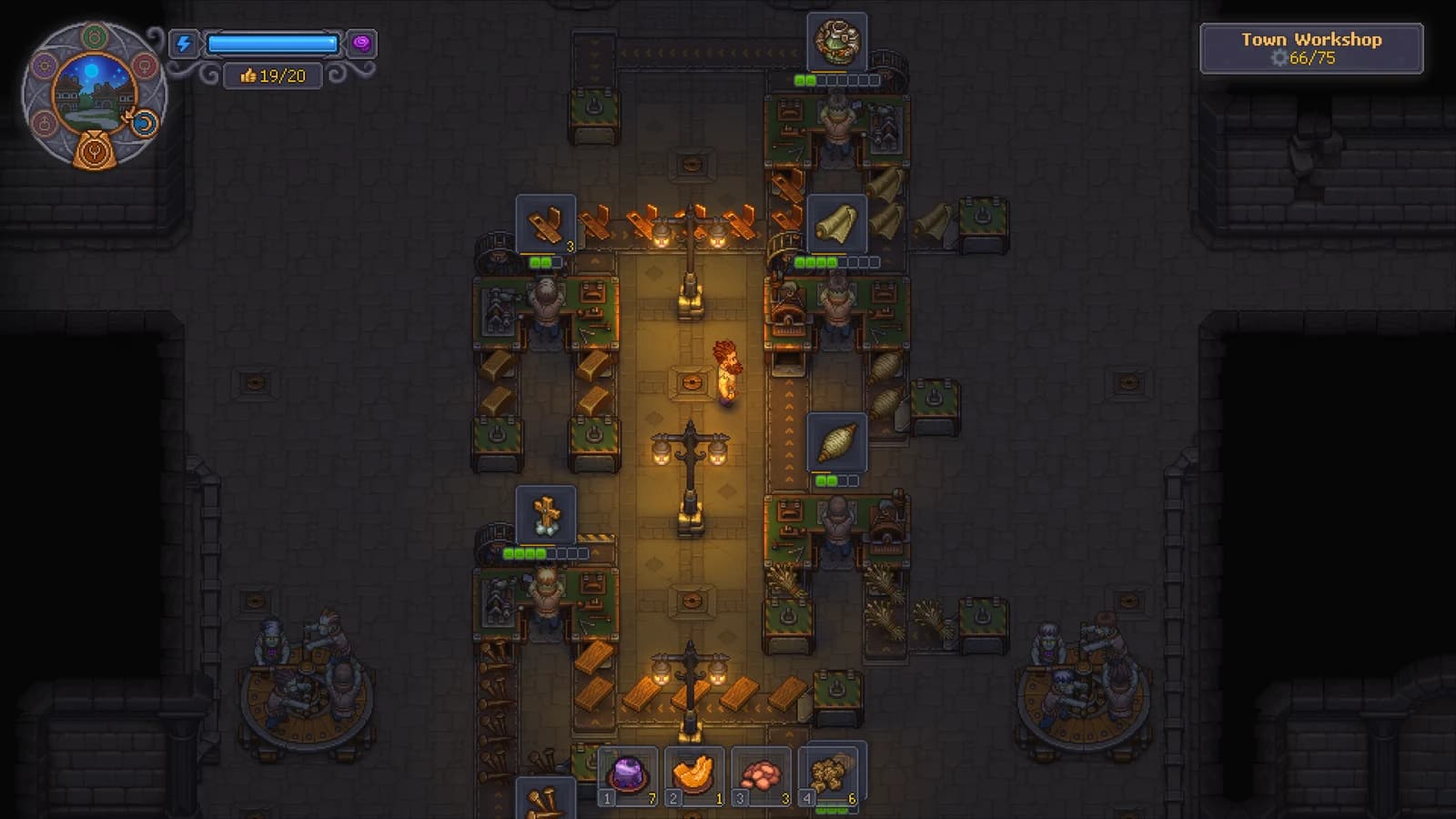
Equipped with tools, they handle gathering and crafting, and in underground factories they operate semi-automatic machines.
Launch coverage describes conveyor-belt assembly lines staffed by zombies for more complex production.
Because there is no multiplayer, this workforce is the only help available — the scale of The Town assumes you build it.
Preparing for the day the battle comes
Since city battles only run on one day each week, the days in between are your preparation window.
Materials become barricades and towers that hold the line at the approaches to your position.
Zombies become squads once armed, and better weapons and armour make them more effective.
Turning up with neither means waiting a full week for the next attempt, so stock the battle day like any other scheduled event.
What is not spelled out yet
The developers have not published a district list, a building catalogue or exact restoration costs.
Claims about an optimal rebuild order or hidden prosperity counters circulating before launch are not backed by a first-party source, so this page does not repeat them.
What is confirmed is the shape of the system: reclaim, restore, choose deliberately, and watch markets and corpse quality respond.
Specific verified costs will be added here as they are documented.
How the Town fits the series
The Town has existed in the fiction since the first game, glimpsed through the guarded gate you could never pass.
Its ancient streets appeared in the Game of Crone DLC, and during the events of the original it was a working medieval city somewhere beyond the horizon.
The sequel is set eight years later, and without a keeper the world did not improve on its own.
The developers say the Town will keep existing and evolving even after the story of Graveyard Keeper 2 ends.