Short answer
The map covers The Town and its southern outskirts plus another village and tavern, another forest and swamp, and another church and graveyard. The Town itself is not open from the start — you unlock it district by district by winning street battles. There is no Teleportstone; fast travel runs on Milestones between locations you have already reached.
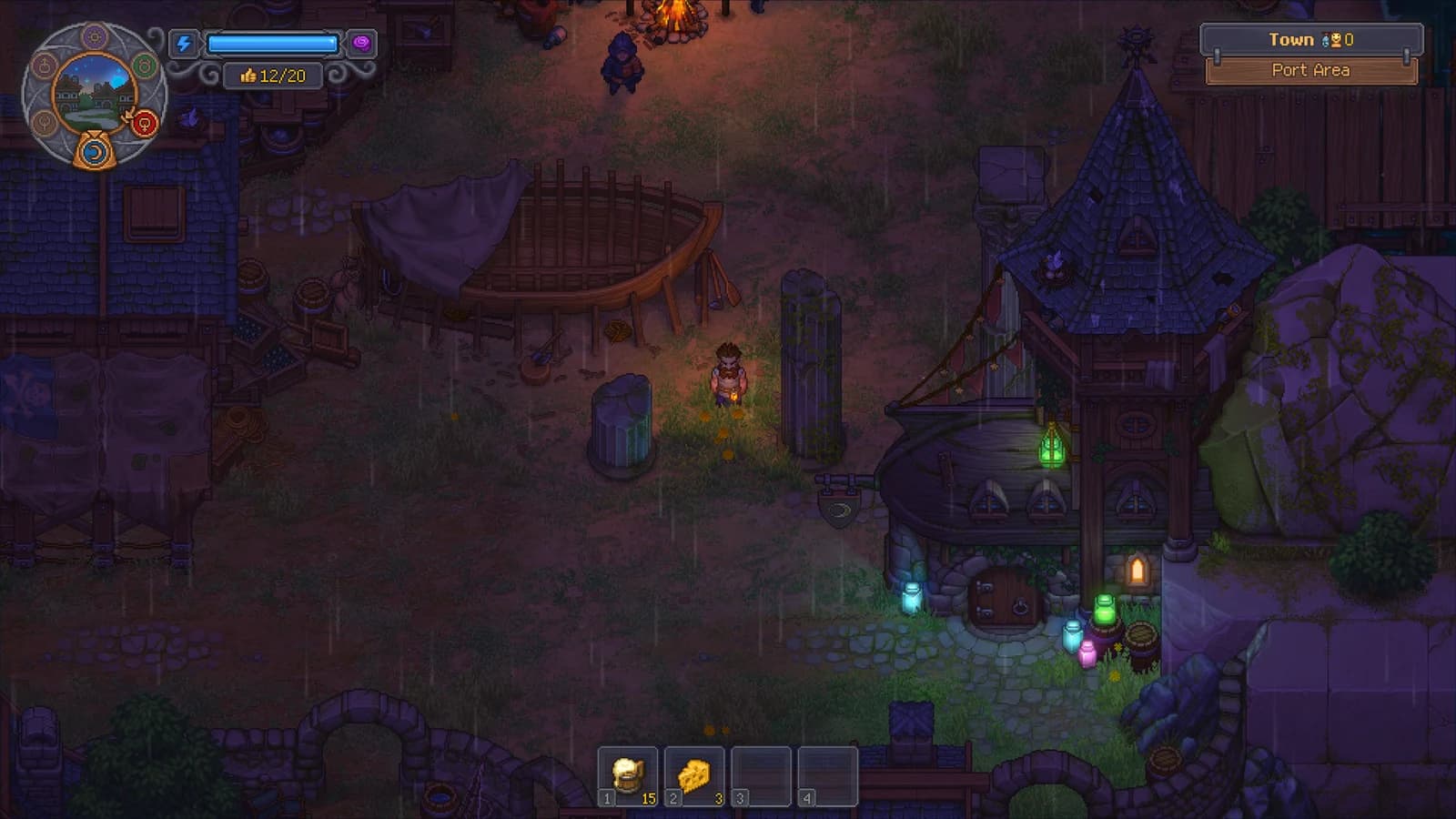
The Town harbour at dusk
View full-size image ↗Official promotional screenshot · © Lazy Bear Games / tinyBuild · Official media kit · Material credits
How big the world actually is
The first game showed only a small slice of its world, with blocked roads hinting at more. The sequel opens a much larger part of it.
The developers list the explorable areas directly: The Town, its southern outskirts, another village and another tavern, another forest and another swamp, another church and another graveyard.
They describe these places as different but familiar, deliberately echoing the original's geography rather than repeating it.
The Town unlocks in pieces
Most of The Town is overrun by townsfolk who turned into zombies, and your job is to reclaim it district by district.
Battles take place on the streets themselves rather than in separate arenas, which means each part of the city doubles as its own battlefield with its own layout and win conditions.
Once you win, that part of the map changes permanently: the streets you cleared become populated by townsfolk and market stalls.
Where your base and graveyard sit
The graveyard is not inside the city. It sits in a quiet area outside the city walls, near the Keeper's base.
The graveyard is also the one area you lay out yourself. Tech tree unlocks give you Graveyard modules that provide space for tombs, benches, columbaries, monuments and graves.
New grave designs and decorations are part of that system, so two players' graveyards can look quite different.
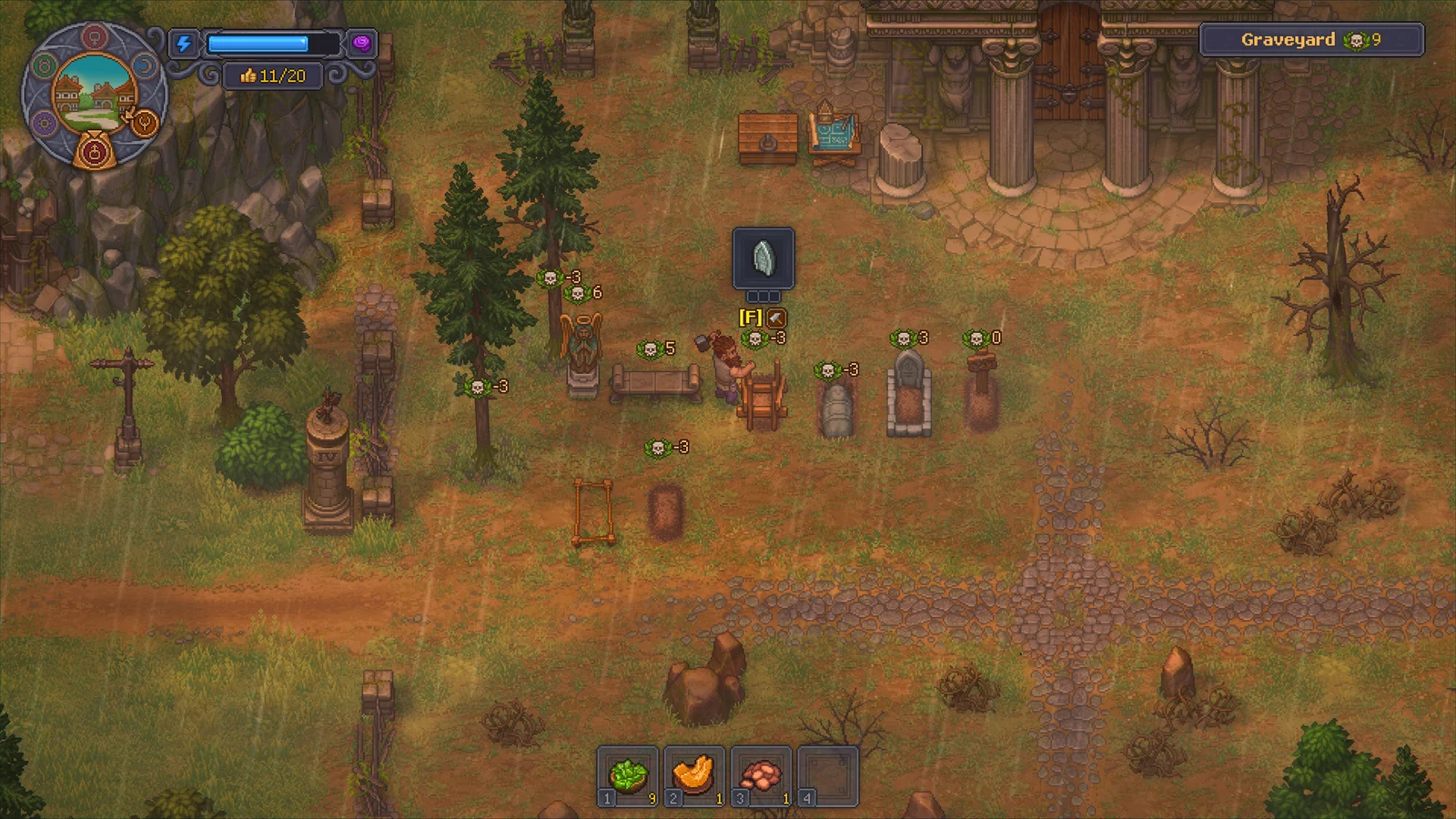
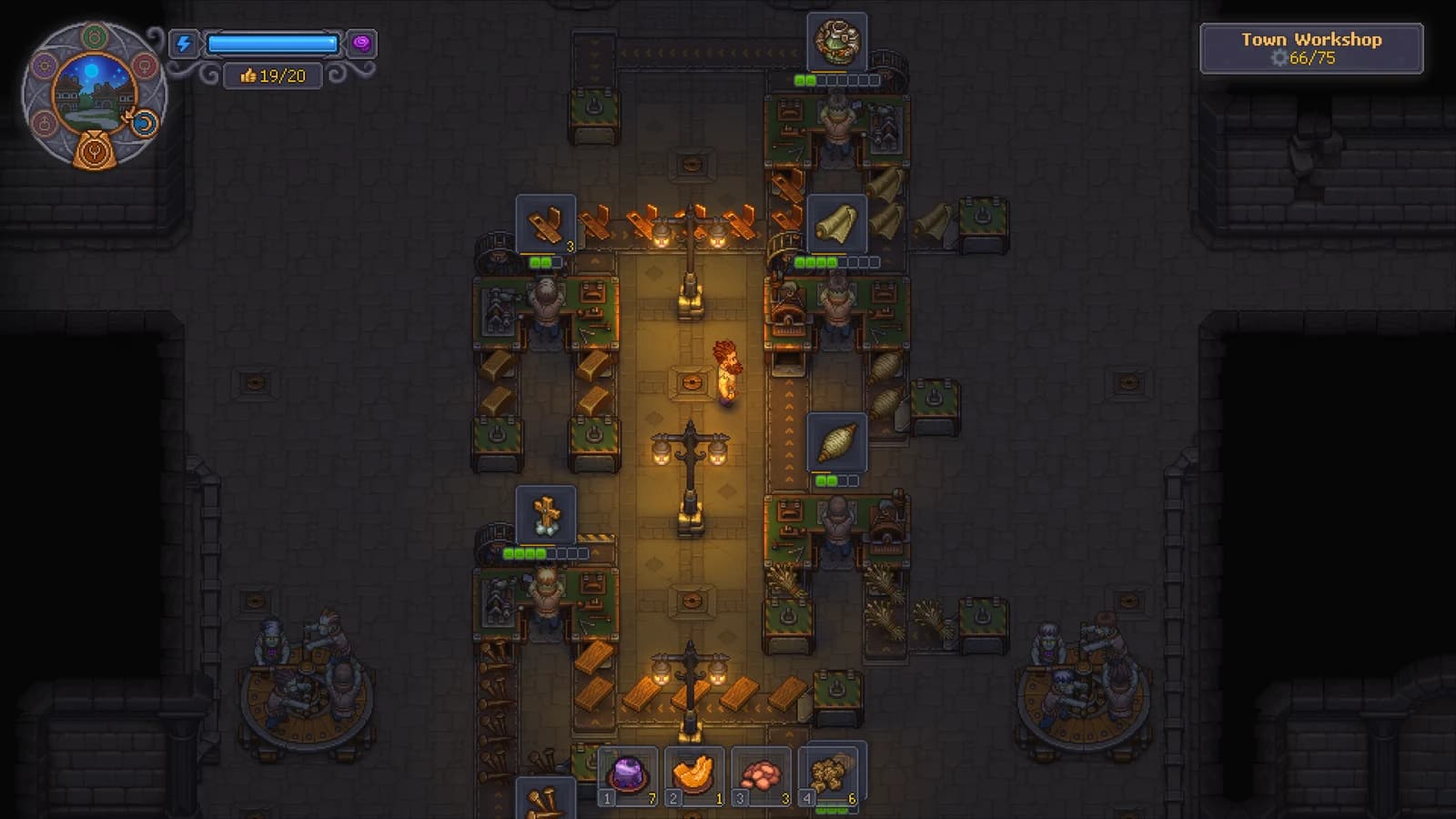
The graveyard is one local area within the world. This is a location screenshot, not a complete or annotated world map.
View full-size image ↗Official promotional screenshot · © Lazy Bear Games / tinyBuild · Official media kit · Material credits
The map has vertical space too
Your own house hides a locked hatch leading to an underground area. Opening it and clearing the junk is how you meet the Plague Doctor, which is the gateway to zombie workers.
Underground space matters later as well: zombies operate semi-automatic machines in underground factories, and reanimating new workers requires a dedicated room below ground.
Beneath The Town there are also sewers, which stay open every day of the week as a combat area.
Getting around without a teleport stone
The developers decided against including a Teleportstone in the sequel, noting that plenty of players never found or used the original one.
In its place, Milestones let you fast travel between unlocked locations, so the map opens up as you explore rather than all at once.
Because certain character-linked mechanics are still tied to specific days of the week, where you are on a given day is a genuine planning decision.
Who you meet out there
The world is populated rather than empty. Traders arrive carrying goods from foreign lands, and refugees look for new homes in a zombie-infested city.
Unlike the first game, key quest characters generally remain at their regular locations instead of appearing in the village once a week.
The developers also confirm that several characters from the original return, though most of the cast is new — including your talking skull companion, who they state is not Gerry.
The graveyard is the part you design
Beyond unlocking Graveyard modules, the point of the system is layout: each module provides space for different objects, so your plot grows in deliberate blocks.
Tombs, benches, columbaries and monuments sit alongside the graves themselves, and new grave designs and decorations expand the palette.
Because burial rating depends on corpse quality — net white skulls after you remove corrupted organs — the graveyard is a scoring space as much as a decorative one.
A bigger, more prosperous Town sends you more and better corpses, so your graveyard plan should assume growth rather than a fixed plot.
How the map changes as you play
The city is the only part of the world that transforms structurally. Winning a battle usually unlocks a new part of the Town.
Cleared streets then fill with townsfolk and market stalls, and restored buildings create new markets for your goods and unlock products you could not previously buy.
So the map is not just revealed, it is economically reshaped by what you choose to rebuild.
Outside the walls, your base and graveyard remain the stable anchor you return to between pushes.
Planning routes around the week
City battles run on one fixed day per week, which makes that day a travel decision as much as a combat one.
The sewers are open every day, so they are the fallback when you want fighting without waiting for the calendar.
Because certain character-linked mechanics still have designated days, it pays to group errands by location and day rather than crossing the map twice.
Milestones make that practical once unlocked, but they only connect places you have already reached on foot.
What is not confirmed yet
No official annotated map has been published, so exact resource node positions and interior layouts are not documented by the developers.
Community maps that appeared before launch should be treated as unverified until they are checked against the released game.
This page sticks to regions and systems the developers described directly, plus behaviour reviewers observed in the launch build.
As verified details emerge, they will be added here rather than guessed at.
Landmarks the developers have named
Inside the city, the Town Square is called out as its own battlefield, one where waves attack from every direction.
The central streets are a separate kind of map again, fought as a multi-front push over control points.
Beneath everything sit the sewers, open every day, and the developers hint at something deeper still that they call the Sewrena.
Above ground you also pass through the southern outskirts, which connect the city to the villages and wild areas around it.
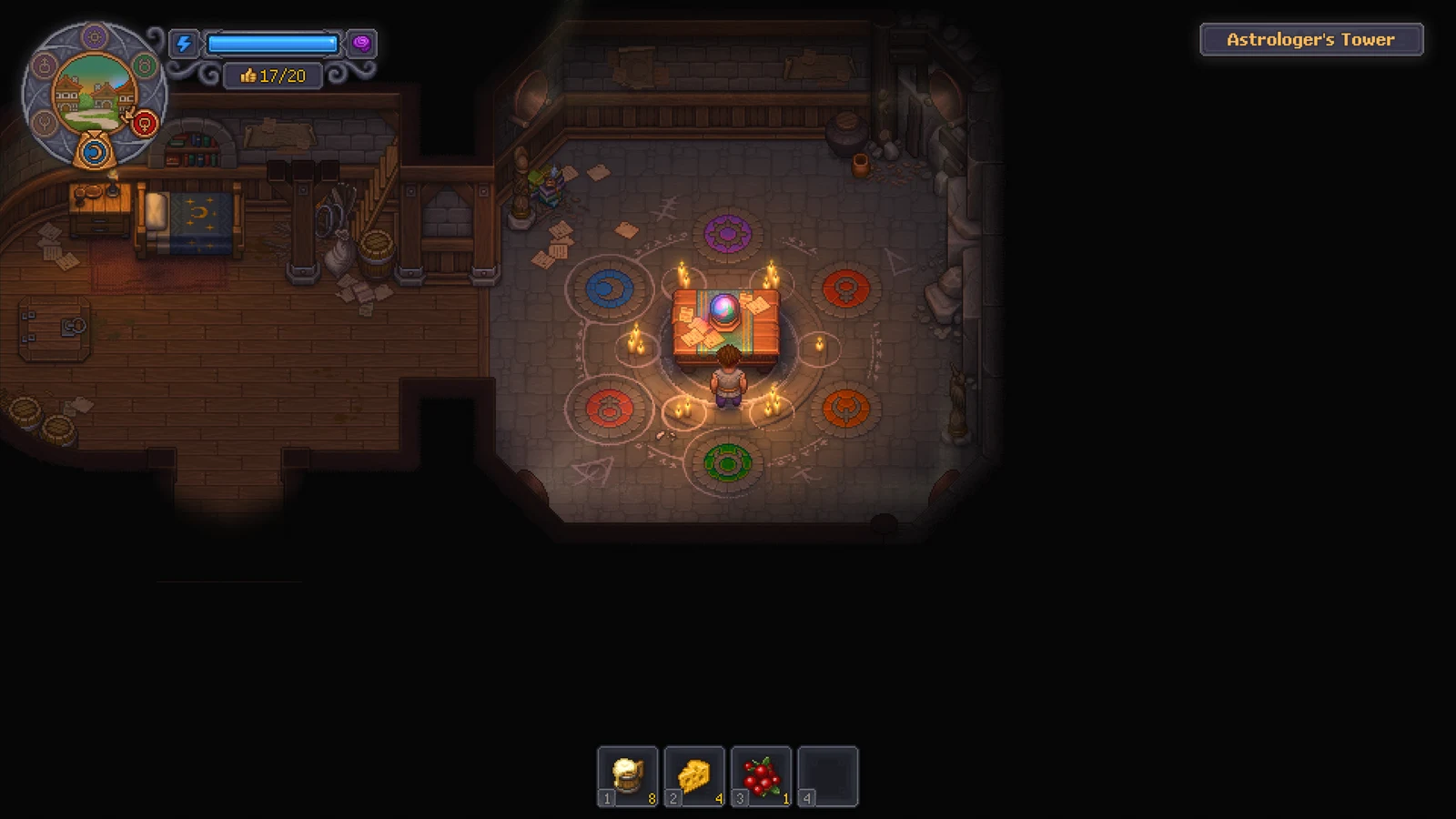
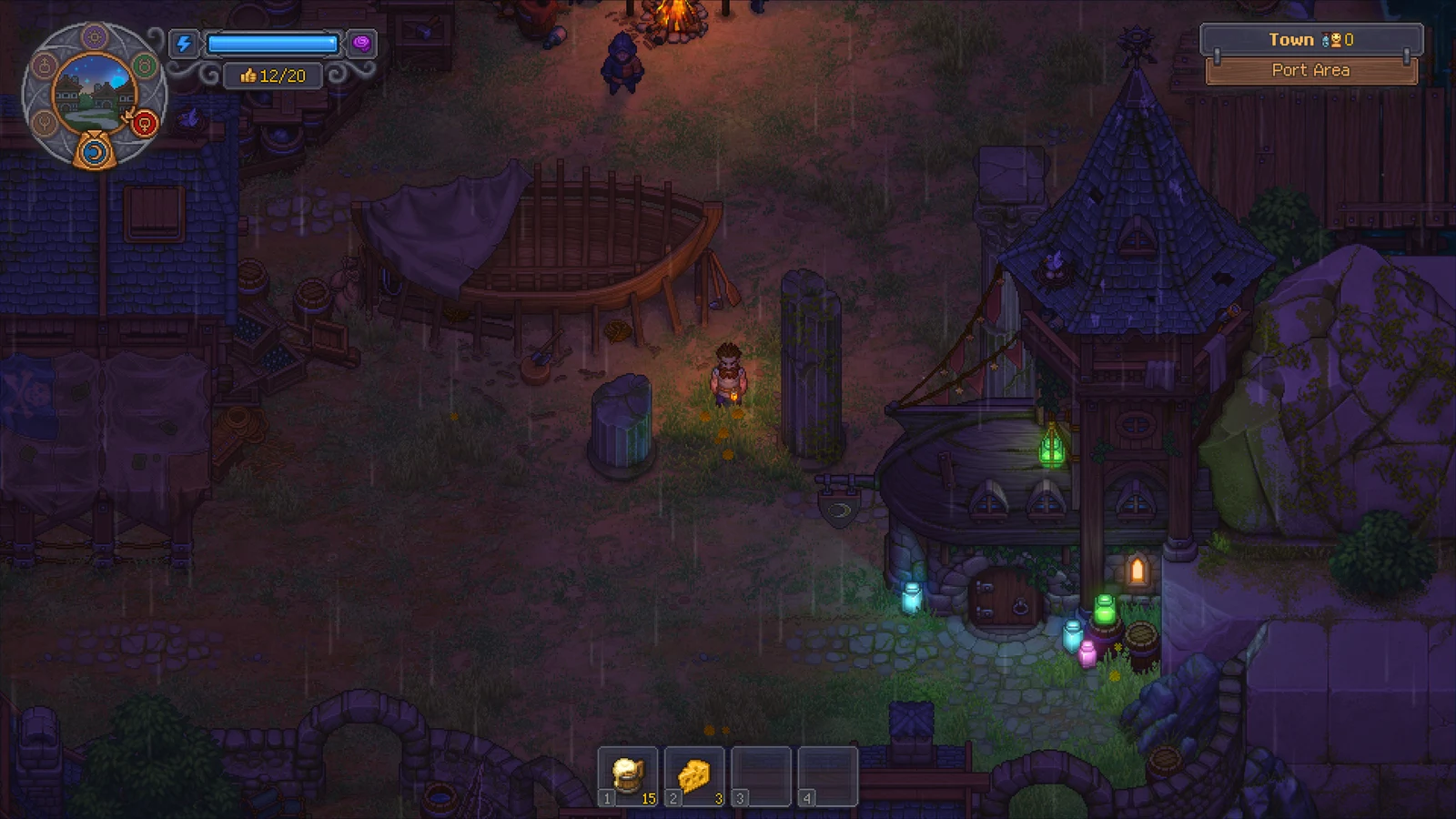
The Astrologer's Tower interior, as shown in the official media kit. A closer look at one of the world's landmarks.
View full-size image ↗Official promotional screenshot · © Lazy Bear Games / tinyBuild · Official media kit · Material credits
Reading the world as an economy
Locations are not only places to stand — restored buildings create new markets for your goods and unlock resources you can buy.
Traders arrive from foreign lands, and refugees move into the city as it becomes livable, so the population of a district is a signal of its economic state.
That makes exploration and rebuilding two halves of the same activity rather than separate modes.
The developers frame the whole arc as the Town entering an era of mass production and mass consumption.