Short answer
Officially, around 3–4 hours. The developers describe the demo as covering your first steps all the way to the introduction of The Town. In practice the number varies a lot: rushing the main quests is shorter, while clearing your yard, filling out early workbenches and farming tech points can push it well past four hours.
Home and garden
View full-size image ↗Official promotional screenshot · © Lazy Bear Games / tinyBuild · Official media kit · Material credits
The official figure
The Steam demo page states the demo offers around 3–4 hours of adventure, from your first steps to the introduction of The Town.
That is the only first-party number available, and media coverage repeats the same range.
It describes content scope rather than a hard timer — the demo ends at a story point, not after a set number of minutes.
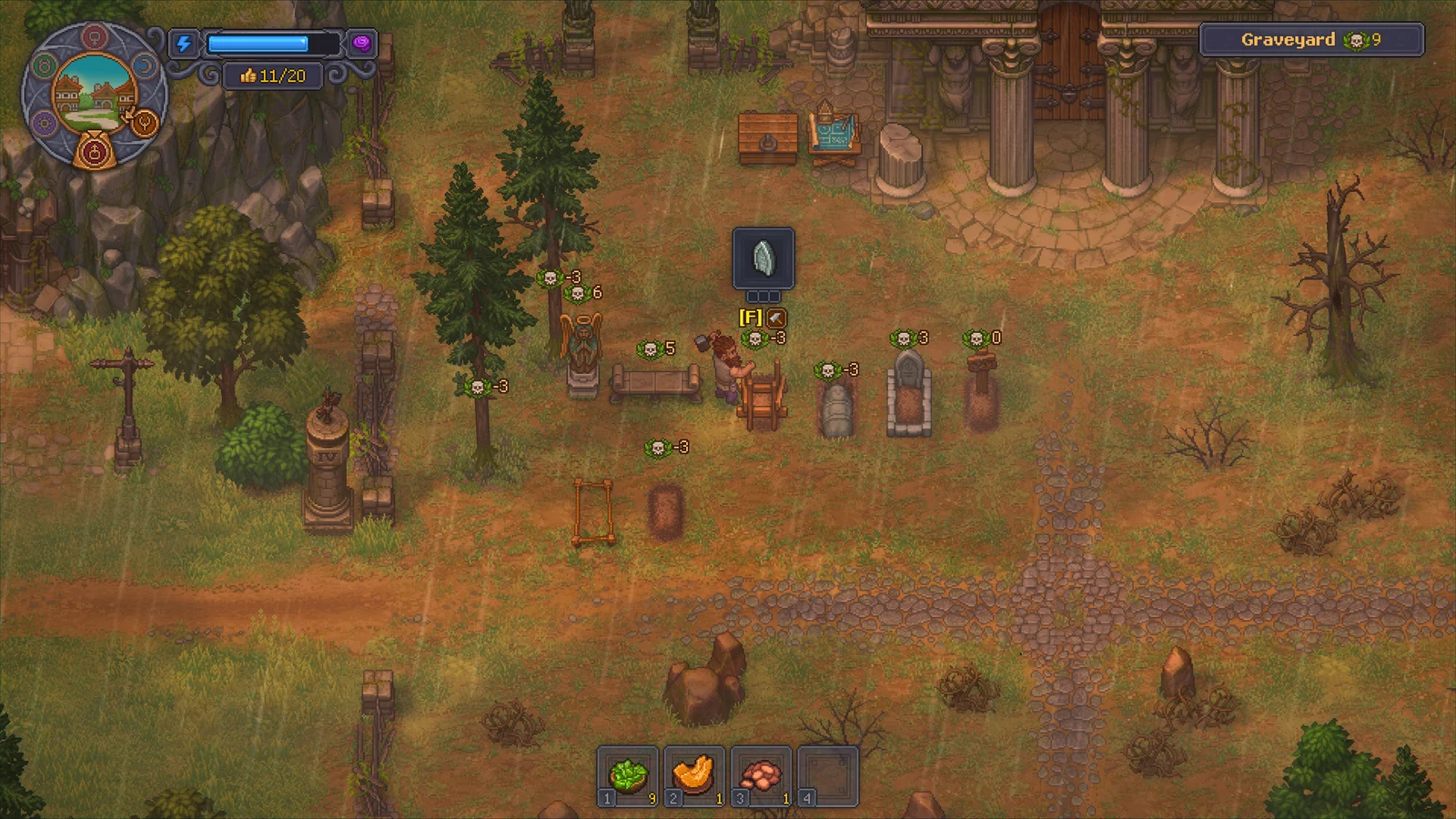
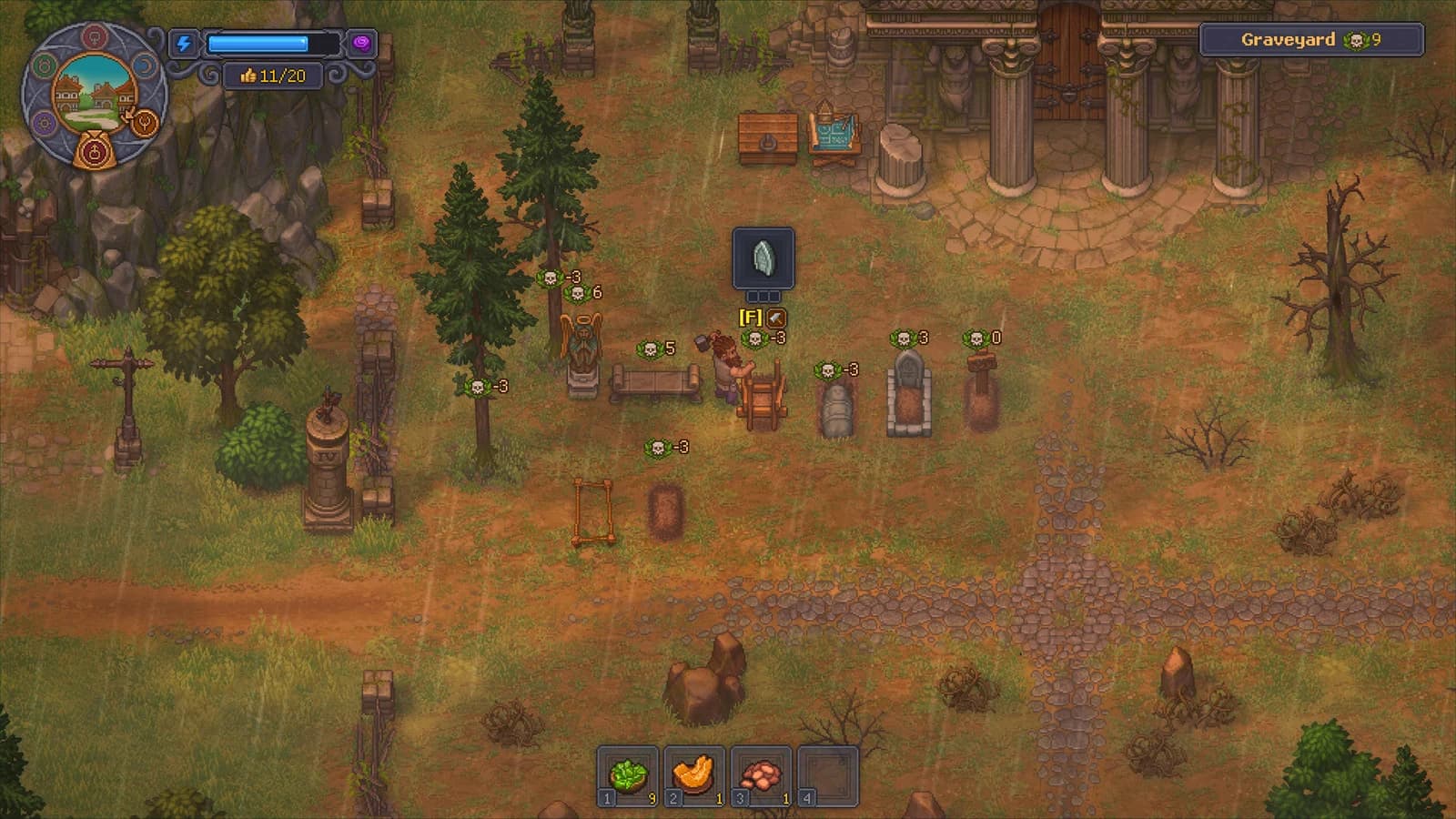
The graveyard setting in an official promotional screenshot. Demo length depends on your pace; this image does not document a timed run.
View full-size image ↗Official promotional screenshot · © Lazy Bear Games / tinyBuild · Official media kit · Material credits
Why players report different times
Community discussion on the game's own Steam forum reflects a wide spread. Players who follow only the main quests finish faster than the stated range.
Players who clear every trash pile, build out the early workbenches, farm tech points and explore the basement can go well beyond four hours.
Both experiences are normal, because the demo does not stop you doing optional work before the ending point.
The save transfer changes the maths
Since the demo save carries into the full game, time spent in the demo is not time wasted — it is the opening of your real playthrough.
That is why many players deliberately extend their demo run, stockpiling materials and finishing early buildings before launch day.
If you intend to do that, treat the 3–4 hours as a floor rather than a ceiling.
What you can realistically finish in that time
Within three to four hours you can comfortably handle the first burials, clear the yard for Bronze Nails and Bronze Scrap, and get a Wooden Anvil and your starter benches running.
You can also reach the locked hatch under your house and meet the Plague Doctor, which is what puts your first zombie workers into the save.
Reaching the introduction of The Town is the natural end point, and that is where the demo content stops.
Creator playthroughs as a yardstick
Several creators split the demo into multiple episodes — digging, then crafting, then meeting the Plague Doctor — which gives a good feel for a normal pace.
Other videos explicitly frame the demo as a Let's Play with progress that persists, treating it as episode one of a longer series.
Watching one of these is the fastest way to judge whether your own pace will land under or over the official estimate.
How it compares to the full game
The demo is the opening only. The full release adds the entire Town rebuild, deeper automation and the weekly battle loop.
For scale, the developers state that across the full game you will lay a little over 4,000 zombies to rest — a figure that only makes sense across a long campaign.
So 3–4 hours is a small fraction of the whole thing, which is exactly what a demo should be.
What to spend the hours on
Yard clearing is the highest-value early activity: trash piles and broken barrels drop Bronze Nails, Bronze Scrap and Boards.
The Wooden Anvil costs 1 Short Log plus 1 Stone and turns scrap into six nails apiece, so build it before the demo ends.
Spending tech points as you earn them is what keeps recipes appearing, since hoarding materials unlocks nothing.
Metallurgy in particular unlocks the Firewood Shed, which is what gives you Fuel for the Furnace, Kiln and Oven.
Do not burn hours on exhaustion
Insanity rises slowly from handling the dead and quickly if you work two in-game days without sleeping.
The ZZZ icon in the HUD is the signal to rest; sleeping before it appears does nothing for insanity.
Berry Pie at the Kitchen Oven costs 4 dough and 6 berries, makes four, and removes 3 insanity each while restoring energy.
Managing that properly is the difference between a productive demo run and a slow one.
Where the demo ends
The stopping point is the introduction of The Town, which is where the sequel's headline system begins.
Everything past that — reclaiming districts, rebuilding shops and housing, the weekly battle loop — belongs to the full game.
Some recipes also sit behind tech the demo never reaches, which is why certain materials cannot be crafted yet.
That is a scope boundary rather than a bug, and it does not affect the save you carry forward.
Getting zombies before the clock runs out
The basement questline fits comfortably inside the demo, and it is the most valuable thing in it.
Follow the story to the locked hatch inside your house, clear the junk below and speak to the Plague Doctor.
Build the Zombie Supplier Station, then equip each zombie with a tool before assigning it to a bench.
Doing this before launch day means your full-game save starts with a working, if small, labour force.
Why the range is a range
The demo ends at a story beat rather than on a timer, so your pace decides the number.
A focused run through the main quests lands under the official estimate.
A thorough run — clearing the yard, building benches, farming tech points, exploring the basement — comfortably exceeds it.
Neither approach is wrong, because everything carries forward either way.
A rough hour-by-hour shape
The first stretch is tutorial-paced: meeting your talking skull companion, handling your first body and digging your first grave.
The middle is where crafting opens up — clearing yard junk, cutting wood, building your early benches and spending the first tech points.
The later stretch is where the basement and the Plague Doctor come in, which is also where zombie workers enter the save.
Then the demo hands you the introduction of The Town and stops.