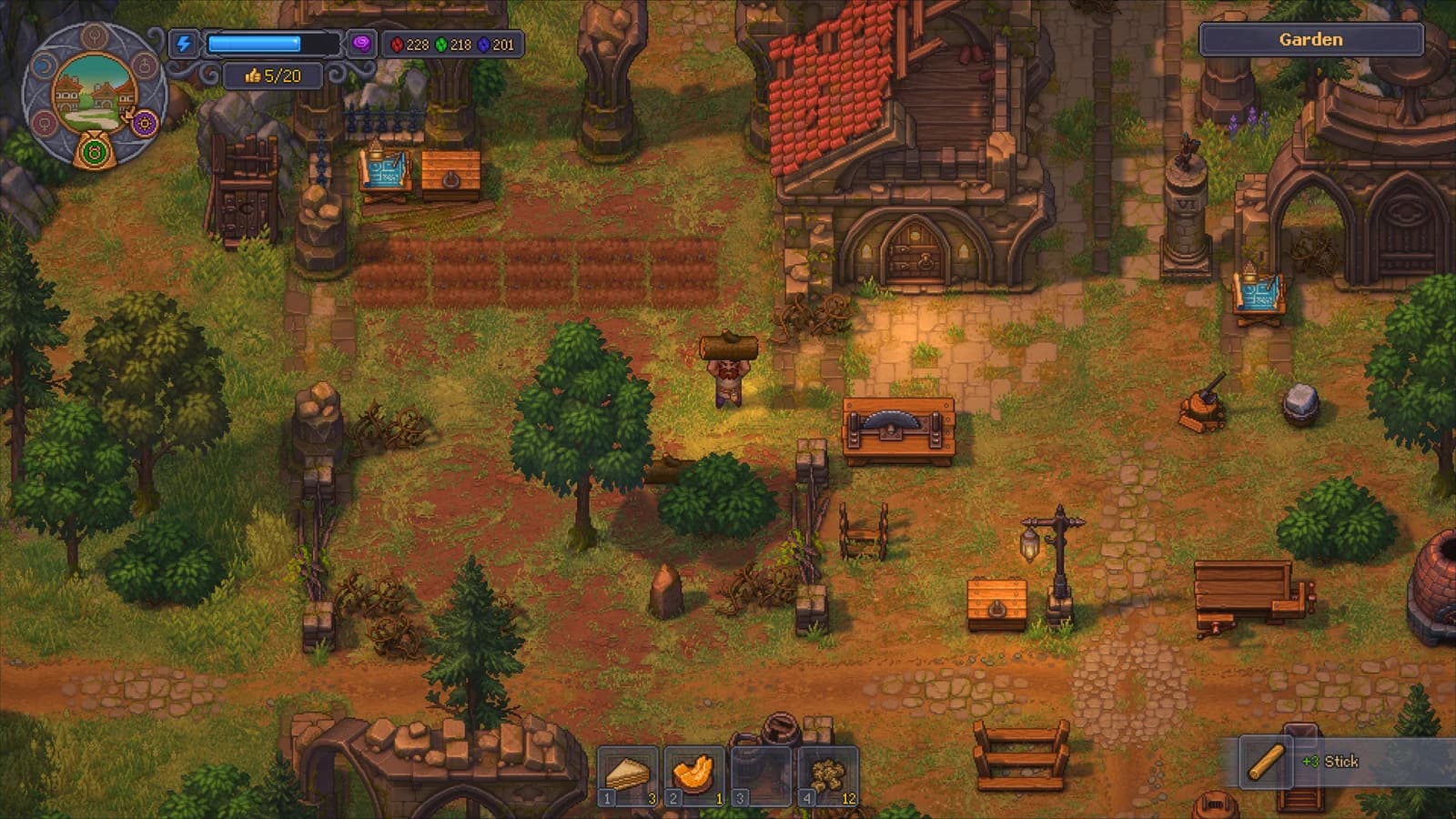
Short answer
Graveyard Keeper 2 runs on one loop: work the graveyard for money and corpses, spend the tech points that work earns, hand the repetitive jobs to zombies, then use that production to rebuild and defend The Town. Unlock wood processing first, then pottery, keep an eye on energy and insanity, and plan around the days of the week — several mechanics only open on a fixed day.
Graveyard Keeper 2 promotional artwork
View full-size image ↗Official promotional artwork · © Lazy Bear Games / tinyBuild · Official media kit · Material credits
What kind of game this is
Graveyard Keeper 2 is a crafting and management RPG from Lazy Bear Games, published by tinyBuild. You play the newly appointed Grand Inquisitor, running a medieval graveyard as a business while a zombie apocalypse eats the kingdom.
The Steam listing files it under Adventure, RPG and Simulation, and it is single-player only. The core verbs are the same as the first game — gather, craft, bury, research — but the sequel layers a whole town and a combat system on top.
The world was rebuilt in 3D for the sequel, and the story is set eight years after the original. You do not need to have played the first game; the developers wrote the story to work for newcomers while keeping callbacks for veterans.
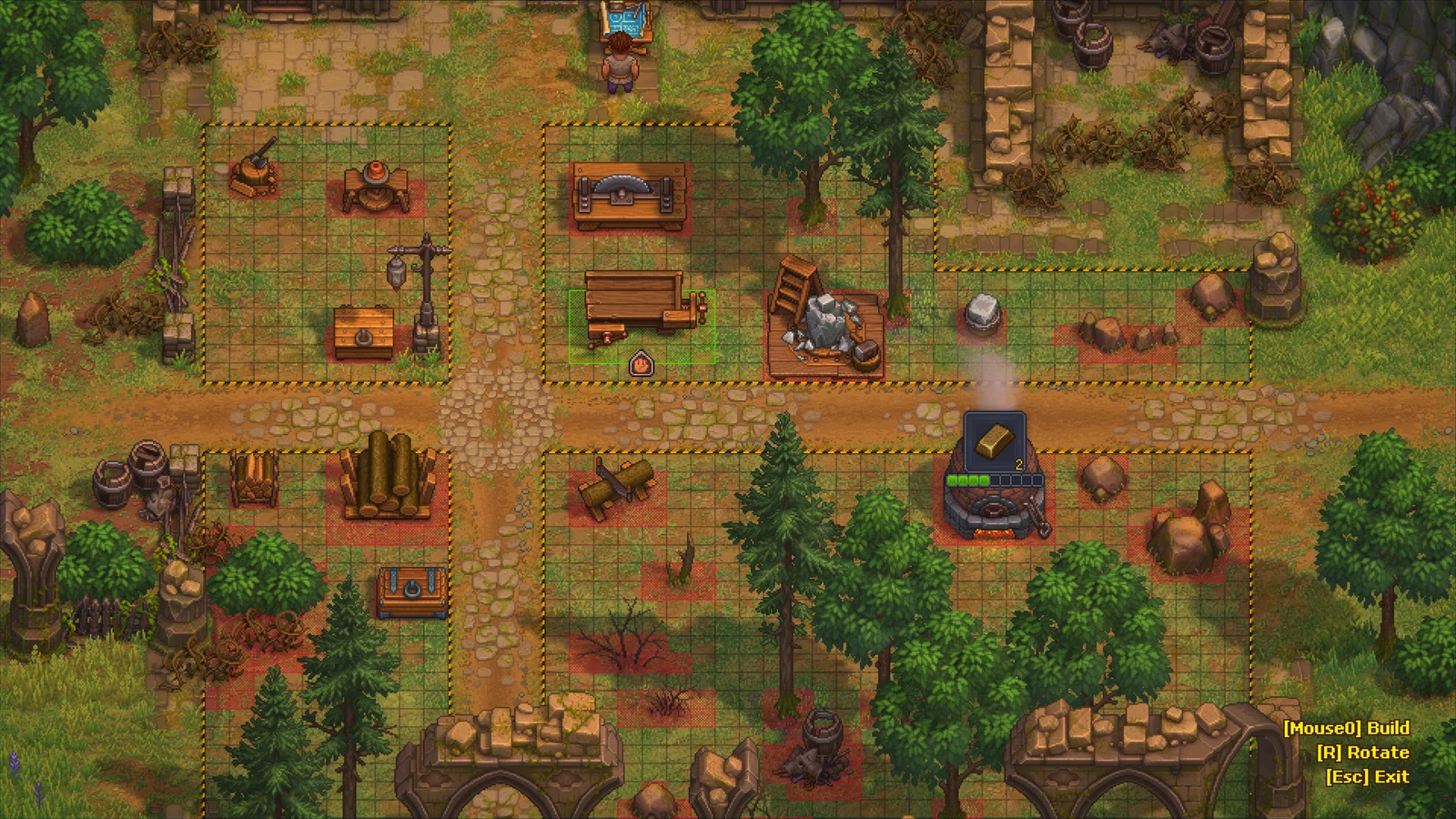
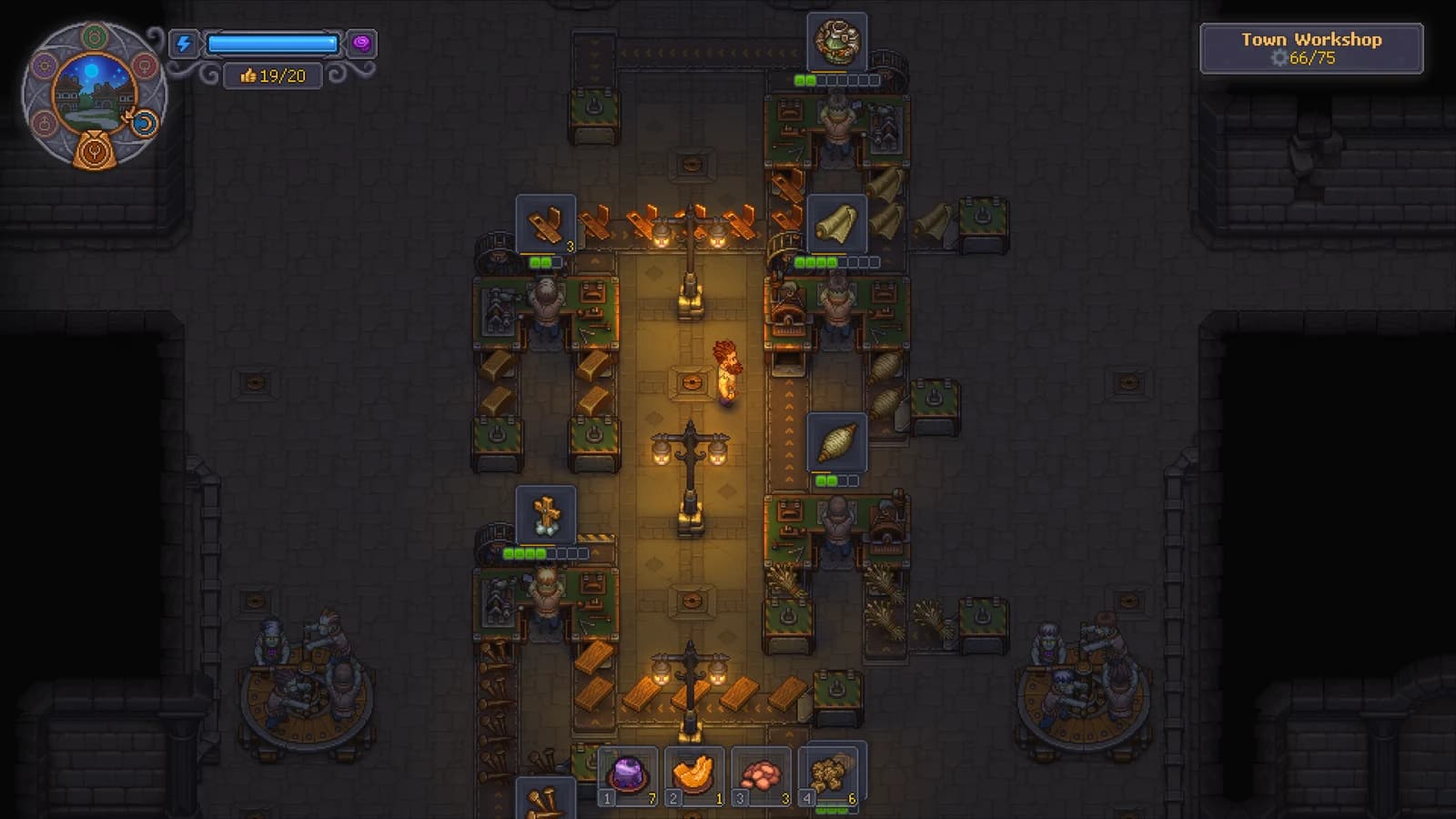
A production yard from the official promotional build: crafting and building are central to the keeper's routine.
View full-size image ↗Official promotional screenshot · © Lazy Bear Games / tinyBuild · Official media kit · Material credits
Your first hours: the unlock order that matters
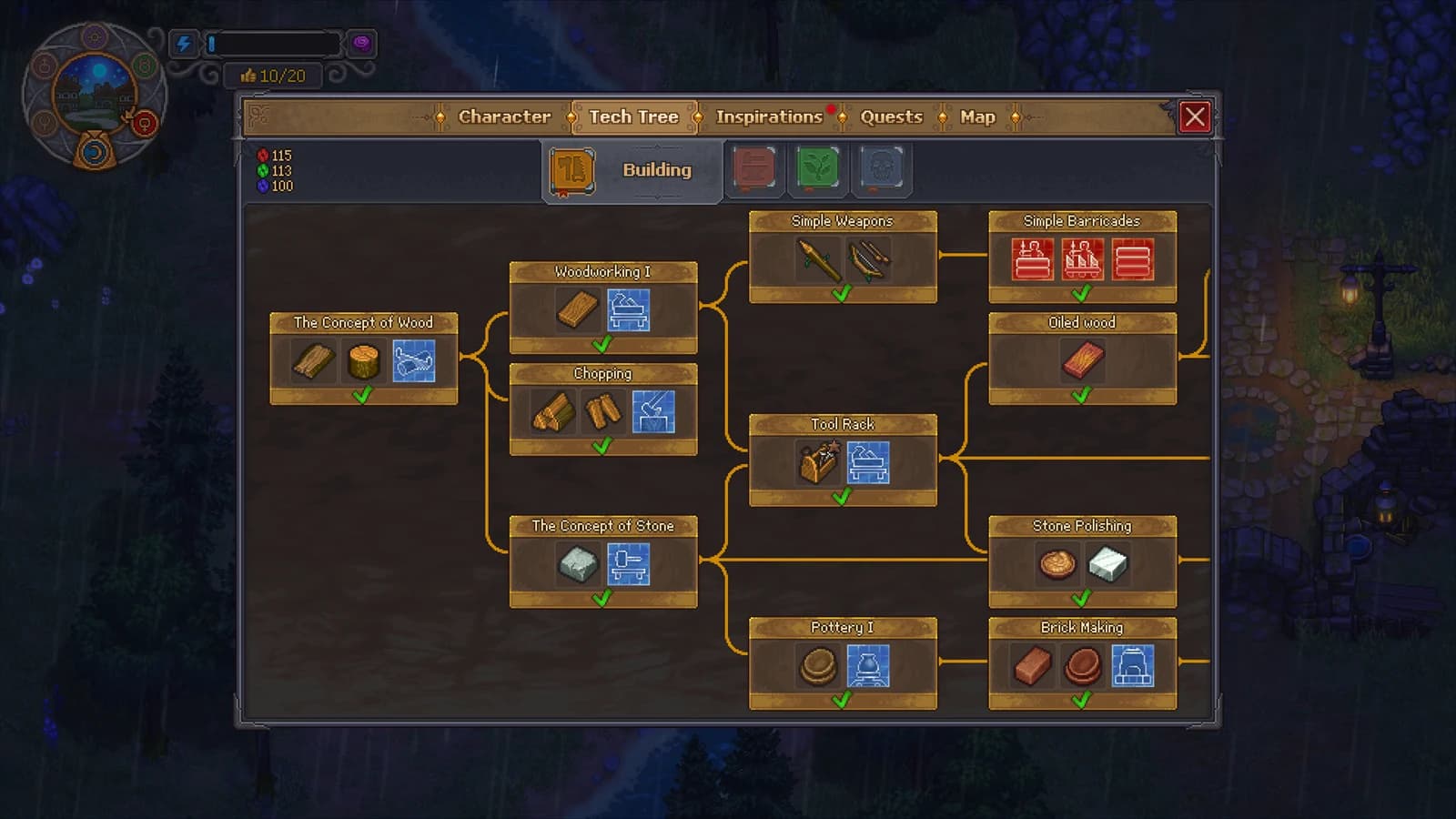
Unlock wood processing in the Tech Tree before anything else. Wood and planks are consumed by nearly every early recipe and building, so running short of them stalls everything else you want to do.
Pottery is the next target, because it is what opens fishing. Fishing then becomes a reliable food source, and food is what buys you uptime between sleeps.
A sensible opening build order is a Mason's Bench, a Sawmill, a Compost Bin, a Garden Plot and a basic Workyard. The common beginner mistake is spreading silver across everything at once instead of finishing one workyard building, one agriculture building and one town service building first.
Energy, food and insanity
Energy is spent on every physical action and restored by food. Mushrooms and berries are the beginner options but restore very little; cooked crop food is the real upgrade, and fish-based food comes after that.
Insanity is the hidden resource that catches new players out. Handling the dead — harvesting organs, prepping bodies, burying them — raises it slowly, and working two in-game days without sleeping raises it much faster.
Watch for the ZZZ icon at the top of the HUD and sleep once it appears; sleeping while you are not tired does nothing for insanity. Berry Pie baked at the Kitchen Oven costs 4 dough and 6 berries, produces four pies, and each one removes 3 insanity while restoring energy.
Tech points and the talent system
Tech points are handed out for almost everything you do, and they are what unlock new crafts and buildings. Red points in particular come from chopping wood and mining stone and clay, and the Building and Metallurgy branches run on them.
Hoarding materials does not unlock recipes — you have to spend points in the tree. The practical habit is to unlock as you work rather than stockpiling and waiting.
Alongside the familiar tech tree, the sequel adds a talent system. The developers describe it as making the grind more enjoyable and state plainly that there is less grinding this time.
Zombies, The Town and combat
Zombie workers are the sequel's automation layer. You get your first two from the Plague Doctor beneath your house, and a zombie with no Work Mastery will not touch a workbench until you equip it with a tool.
The Town is reclaimed district by district and then rebuilt: restore housing, reopen cafés and shops, and each restoration creates new markets for your goods and unlocks products you could not buy before. A larger, more prosperous Town also sends you more and better corpses.
Combat is tied to the calendar. City battles open on one fixed day of the week, while the sewers are open every day, and you prepare by building barricades and towers and arming zombie squads.
Getting around and planning your week
There is no Teleportstone this time. Fast travel works through Milestones, which connect locations you have already unlocked.
Important quest characters no longer visit once a week from somewhere off-map; they stay at their usual locations. Certain mechanics attached to them are still restricted to their designated days, so a weekly plan still pays off.
The explorable world goes well beyond the first game's village: The Town and its southern outskirts, another village and tavern, another forest and swamp, another church and another graveyard.
Money, corpses and the graveyard rating
The graveyard is a business before it is anything else, and corpse quality is what it trades on. Quality is a net score: white skulls for purity minus red skulls for corruption.
During autopsy you remove corrupted organs to push the net white count up, and that higher net score is what burial rating rewards.
Burying bodies the moment they arrive is therefore one of the costliest early habits, because a grave plot spent on an unprocessed corpse is spent for good.
The Town feeds this loop back to you: as it grows and prospers, you receive more corpses and better ones, with more skulls on each.
What changed since the first game
The world is now built in 3D rather than stylised 2D pixel art. The developers say the original's design was constrained by 2D limits and that they wanted a world they could fully experiment with.
The sequel also drops the Teleportstone, adds the talent system, and replaces the once-a-week visiting-character pattern with characters who live where you can find them.
Zombie logic is inverted too: the original trained you to chase white skulls, while zombie workers here develop better skills the more corrupted — red-skulled — their body was.
Conveyor-belt factories and zombie battles are entirely new mechanics with no equivalent in the 2018 game.
Things worth knowing before you start
There is no multiplayer. Steam lists the game as single-player and the PlayStation listing says 1 player, so your only helpers are the zombies you raise.
There are no cheat codes or console commands either, which is why the intended shortcuts are automation and smart tech spending.
The free demo is the opening 3–4 hours and its save carries into the full game on the same platform, so anything you build there is not throwaway practice.
Eleven languages are supported for interface and subtitles, with full voice audio in English only.
A repeatable weekly routine
Because several systems are day-locked, the cleanest way to play is to think in weeks rather than tasks. Fix your battle day and your sermon day first, then fill the gaps.
On production days, stock the inputs those fixed days consume: materials for barricades and towers, prayers for the temple, fuel for anything that burns.
Keep one eye on energy and insanity throughout — a day lost to exhaustion usually costs more than the work it saved.
Then spend the tech points the week generated instead of banking them, since unspent points unlock nothing.
Sources
- officialGraveyard Keeper 2 on Steam
- officialDevlog: Old World — New Story (Sep 2, 2026)
- officialDevlog: The Town That Probably Exists (Jun 16, 2026)
- pressPro Game Guides — Complete Graveyard Keeper 2 Beginner's Guide
- pressNetto's Game Room — Graveyard Keeper 2 Review
- pressGamesHorizon — How to Cure Insanity