Short answer
Tech points are awarded for almost everything you do, and spending them — not stockpiling materials — is what unlocks recipes and buildings. Start with wood processing, then pottery for fishing, and push Metallurgy early because it gates both the Firewood Shed and Bronze Works. A separate talent system sits alongside the tree in the sequel.
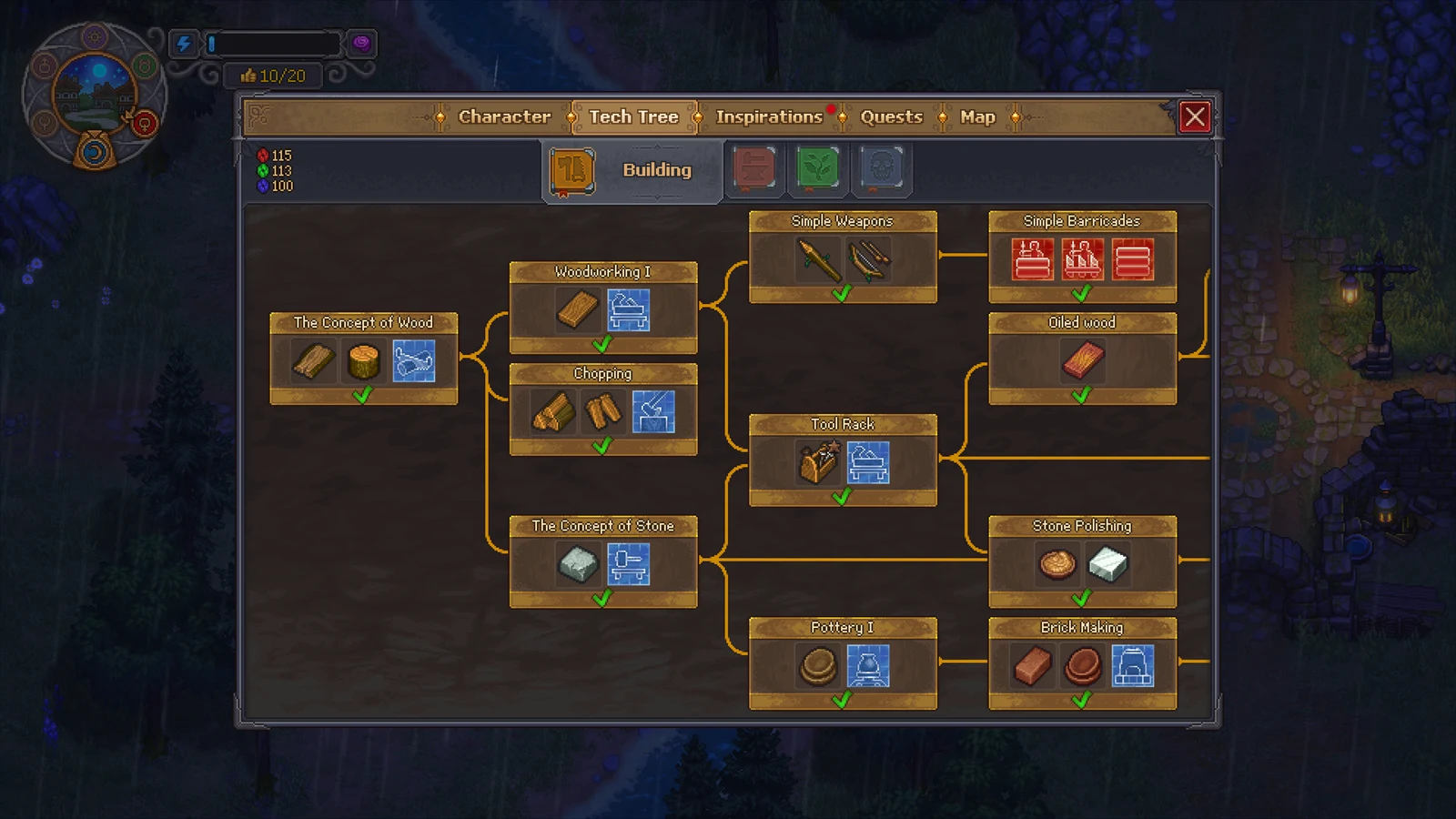
The Building tech tree
View full-size image ↗Official promotional screenshot · © Lazy Bear Games / tinyBuild · Official media kit · Material credits
How points are earned
The tree runs on tech points, and the game hands them out for just about any activity — crafting, gathering and working the graveyard all contribute.
Red points specifically come from physical labour such as chopping wood and mining stone and clay, and the Building and Metallurgy branches consume them.
Character skills are a separate track: they improve by repeatedly performing the matching task and by equipping a better tool for it.
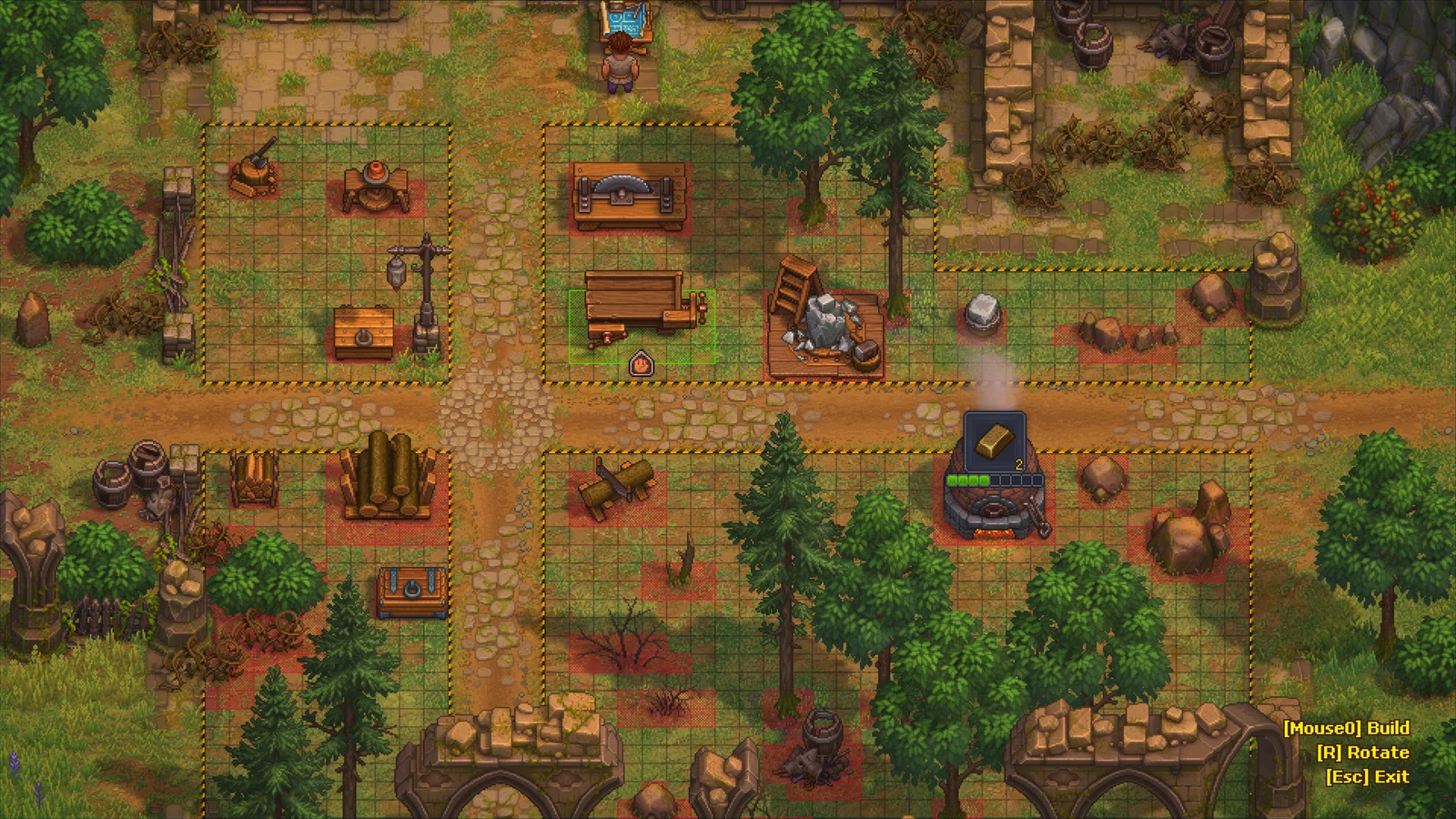
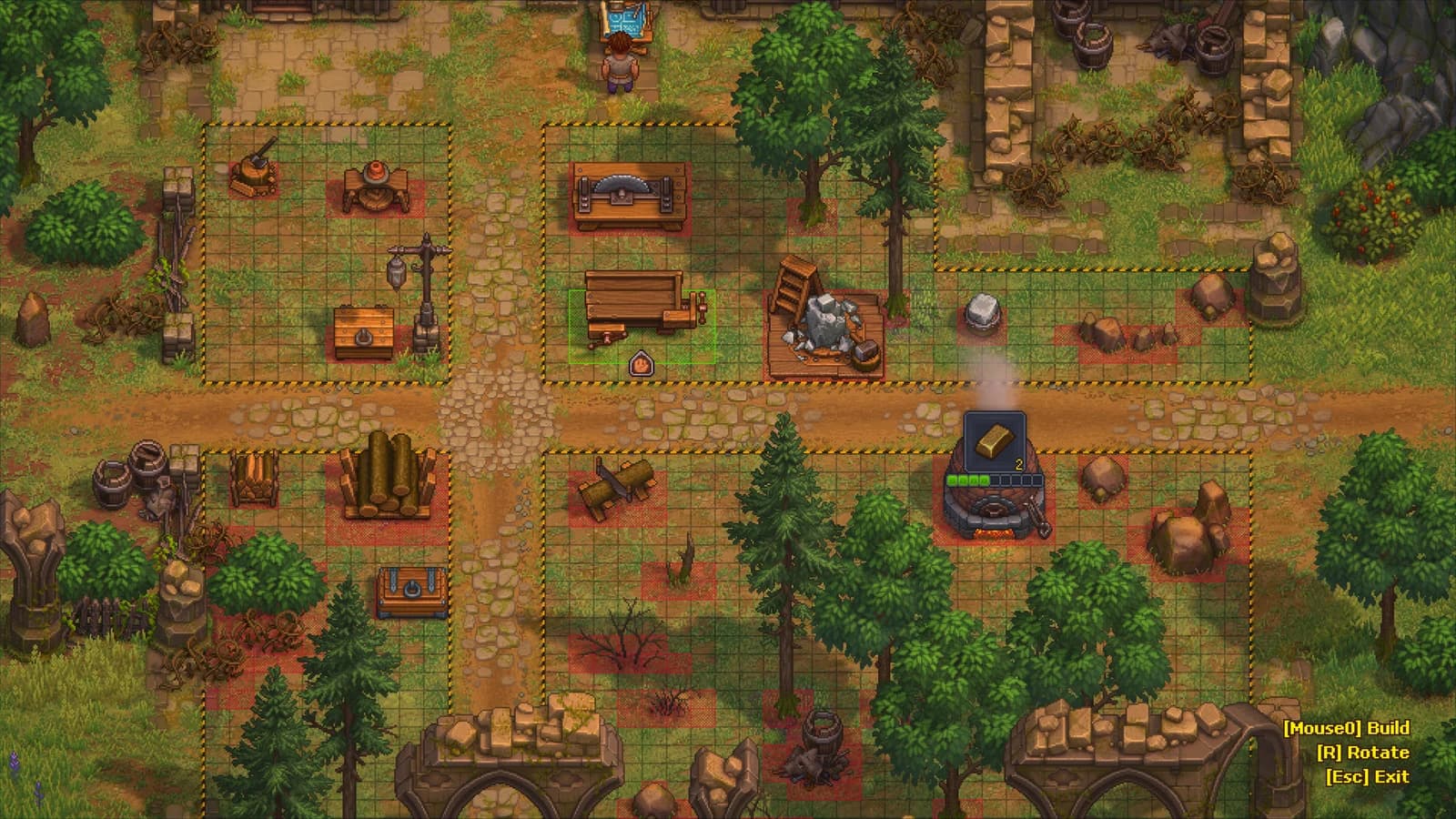
The buildings unlocked through progression give shape to your production yard. Promotional layout; follow the article for unlock guidance.
View full-size image ↗Official promotional screenshot · © Lazy Bear Games / tinyBuild · Official media kit · Material credits
Spend as you work, do not hoard
The most common beginner error is stockpiling materials and waiting for recipes to appear. Recipes come from the tree, not from your inventory.
Because points accrue from labour, the natural rhythm is to unlock something, use it, and let the work it generates pay for the next unlock.
This also avoids dead inventory: materials you cannot yet process are just weight until the matching tech is bought.
The branches that gate your early game
Metallurgy is the branch to respect early. The Firewood Shed sits under it and costs 10 Sticks and 2 Bronze Nails, and without a shed you have no Fuel for the Furnace, Kiln or Kitchen Oven.
Bronze Works also lives in Metallurgy, and it is what lets you work bronze at a Wooden Anvil with a Hardening Bucket nearby.
Anatomy and Alchemy holds the Reanimation perk, which is the prerequisite for producing more zombie workers than the two the story gives you.
A practical opening order
Wood processing first: planks and wood feed nearly every early recipe and building, so being short there stalls everything.
Pottery next, because it is what opens fishing, and fish-based food is the step that meaningfully reduces how often you sleep.
Then Metallurgy for fuel and bronze, which together unblock the furnace chain and a large set of buildings that demand nails.
The new talent system
The developers kept the familiar Technology Tree progression from the first game but added a talent system on top of it.
They describe the talents as designed to make the grind more enjoyable, and state directly that there is less grinding this time.
That is a design-level change rather than a numbers tweak, so expect the sequel's pacing to differ from the original even where systems look familiar.
Zombies have their own progression
Your zombie workers earn tech points too, and spend them on their own perks.
How far a given zombie can go is capped by the red-skull level of the corpse it was raised from — corruption is what raises the ceiling.
That makes corpse selection a progression decision rather than a cosmetic one, and it inverts the first game's habit of chasing white skulls.
A note on the first game's numbers
The original Graveyard Keeper used three point colours and a church Study table where research consumed Science and Faith, with each item studiable only once.
The sequel keeps the shape of that system, but published per-item values from the first game should not be assumed to carry across.
Where this site quotes an exact cost or yield, it comes from sources describing the sequel specifically.
What each early unlock actually buys you
Wood processing is the gate on planks and boards, which appear in nearly every early recipe and building cost.
Pottery is the gate on fishing, and fish-based food is the tier that meaningfully stretches the gap between sleeps.
The Firewood Shed converts Firewood into Fuel — 2 Firewood become 20 Fuel — and without it the Furnace, Kiln and Kitchen Oven are dead weight.
Bronze Works opens metalwork at the Wooden Anvil with a Hardening Bucket nearby, which is where nails, ingots and details all come from.
Feeding the tree while you play
Because points come from ordinary labour, the tree effectively funds itself as long as you keep working rather than idling.
Chopping wood and mining stone and clay are the reliable red-point generators, and they also produce the materials the same branches want.
That overlap is why Metallurgy feels cheap in practice: the work that pays for it also stocks it.
Tools matter too, since character skills improve both from repeating a task and from holding a better tool for it.
Spending points on the workforce
The Anatomy and Alchemy branch holds Reanimation, the perk that lets you produce zombie workers beyond the two the story gives you.
Reanimation also needs a dedicated underground room, so the perk is the start of a project rather than an instant upgrade.
Zombie workers then need equipment before they do anything: a zombie with 0 Work Mastery will stand at a bench idle, while an early axe grants +2 Mastery.
Since each zombie's perk ceiling is set by the red-skull level of its original corpse, your corpse pipeline is part of this investment.
Automation is the long-term payoff
Unlocks eventually stop being about new items and start being about throughput.
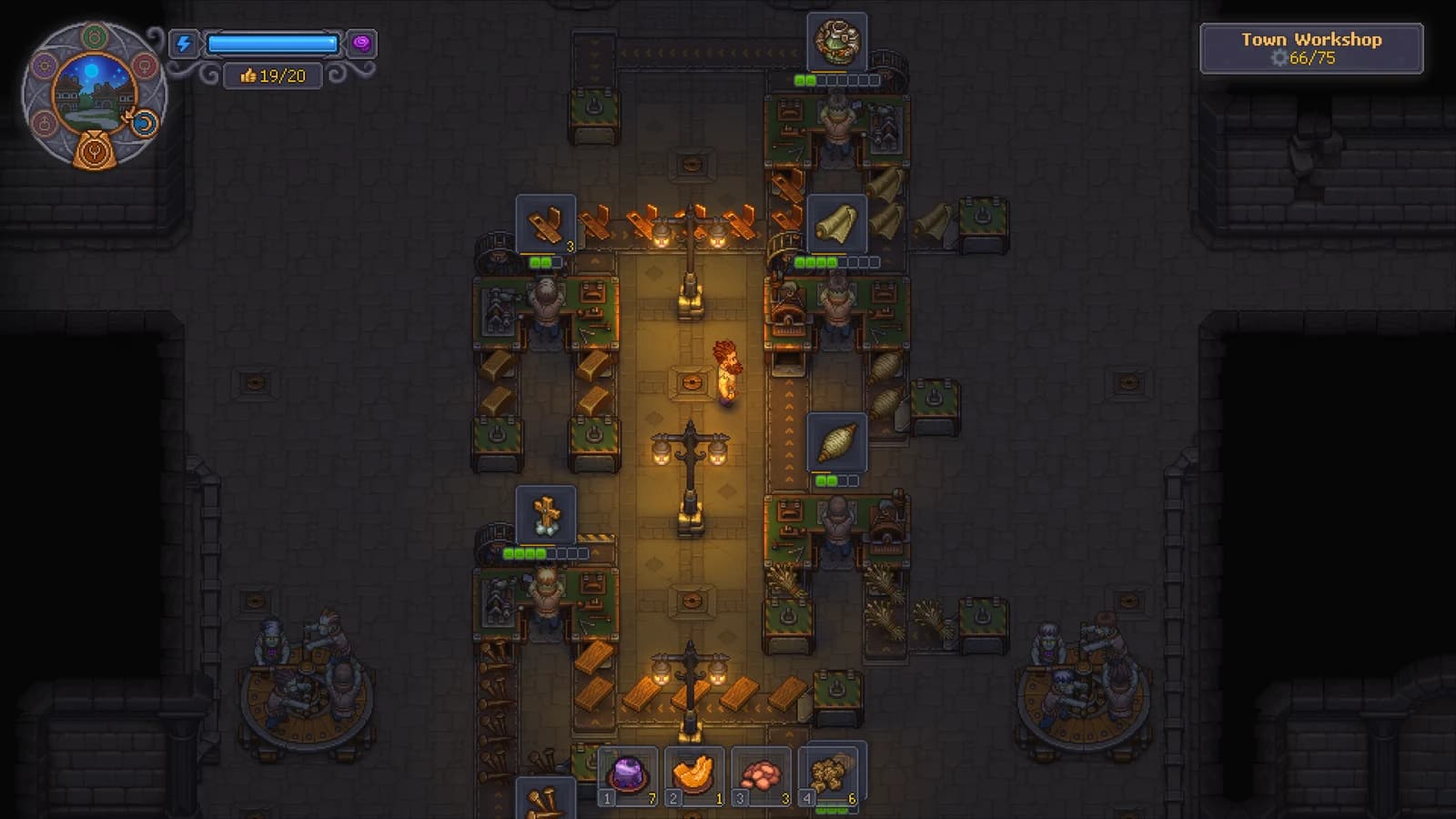
The developers describe zombies operating semi-automatic machines in underground factories once minimum working conditions are provided.
Launch coverage goes further, describing full assembly lines with machines and conveyor belts that zombies staff.
That is the point where fuel capacity, ore supply and worker count all have to scale together rather than one at a time.
Common tech tree mistakes
The biggest one is banking points for something expensive while your basic production sits blocked.
The second is hoarding materials in the belief that recipes appear on their own — they only appear when the matching tech is bought.
The third is ignoring Metallurgy because it sounds like a late-game branch, when it actually gates fuel and nails.
The fourth is spending on convenience buildings before the Firewood Shed, which leaves you with stations you cannot run.
Sources
- officialDevlog: Old World — New Story (Sep 2, 2026)
- pressNetto's Game Room — Graveyard Keeper 2 Review
- pressProdigy Gamers — How to Get Bronze Detail
- pressallthings.how — How to Get Fuel for the Furnace, Kiln, and Oven
- pressItem Level Gaming — How to Get Zombies Working
- videoSheaffer 117 — Why Hoarding Materials Won't Unlock Your Recipes