Short answer
There is no verified completion time yet — the game only releases on September 22, 2026, so no reliable player data set exists. What is known: the demo covers 3–4 hours and is only the opening, the developers say you will put down a little over 4,000 zombies across the game, and the first game averaged around 45 hours for its main story.
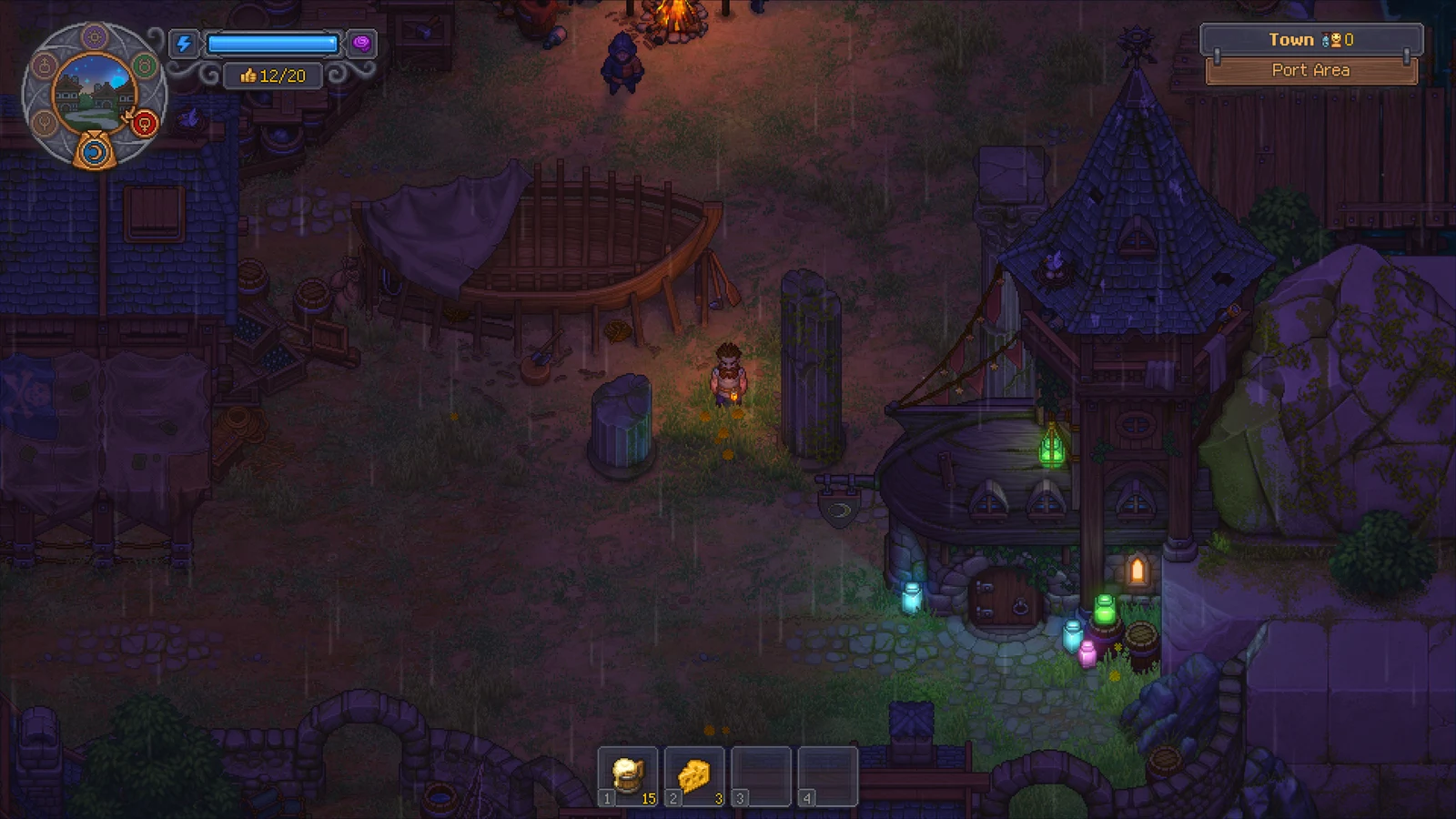
The Town harbour at dusk
View full-size image ↗Official promotional screenshot · © Lazy Bear Games / tinyBuild · Official media kit · Material credits
Why we are not giving you a number
Completion times come from large samples of finished playthroughs, and those do not exist for a game that has not launched.
Specific figures circulating on some sites before release trace back to single unverified pages, so this site does not repeat them.
We will publish a range here once enough real playthrough data is available to stand behind it.
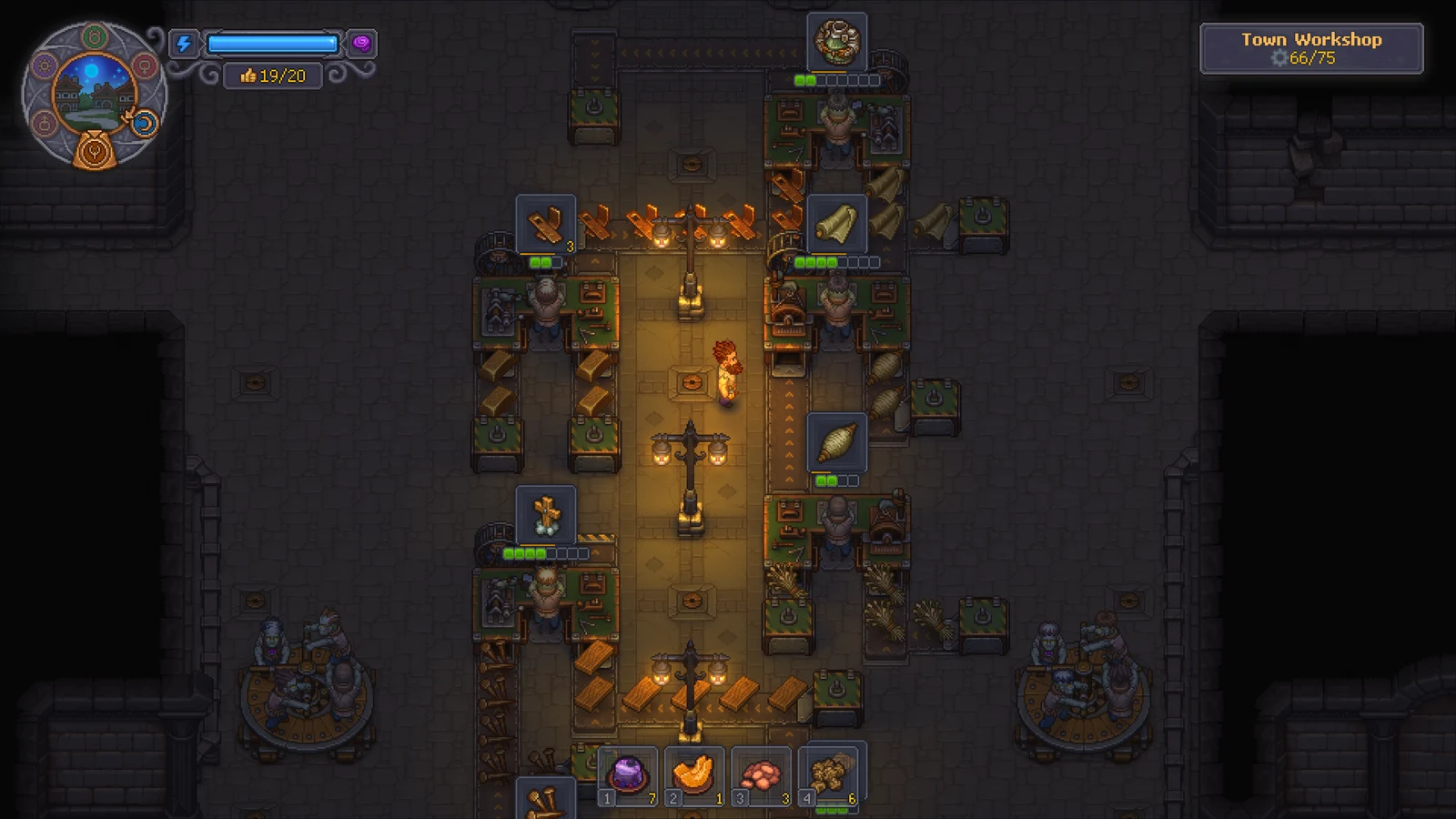
Automation is one of the systems you can spend time developing. A promotional screenshot cannot establish a completion-time estimate.
View full-size image ↗Official promotional screenshot · © Lazy Bear Games / tinyBuild · Official media kit · Material credits
What the demo tells us about the opening
The official demo is around 3–4 hours and ends at the introduction of The Town.
That means roughly the first evening of play does not even reach the sequel's headline system.
Everything that follows — reclaiming districts, rebuilding, automating with conveyor factories — sits beyond that point.
The one hard number the developers gave
In the combat devlog the team states that over the course of the game you will lay a little over 4,000 zombies to rest.
Since city battles only run on one day per week in-game, that volume of combat implies a long campaign rather than a handful of set pieces.
It is the clearest official signal about scale currently available.
The first game as a baseline
The original Graveyard Keeper averaged about 45 hours to beat the main story, and could be pushed under 40 hours by players who knew exactly what to do.
The sequel has a larger world, a town to rebuild and a combat layer the original never had.
But it also explicitly reduces grind, so a straight "bigger game equals longer game" assumption does not hold.
What the reviews suggest
The launch-window critical response landed at a Metascore of 71 from seven reviews, split evenly between positive and mixed.
Several reviews frame the game as dense and systems-heavy, with Shacknews calling the gameplay deliberately tedious and IGN Portugal noting micromanagement can be exhausting.
More positive takes, such as DualShockers, describe it as a sequel that delivers in almost every way. Either way, the reviews agree it is a substantial game.
What will change your own time
The weekly cadence is the biggest factor: with battles and certain character mechanics locked to specific days, planning efficiency directly affects total hours.
Automation is the second: the sooner zombies staff your production, the less of your time goes into manual labour.
And the rebuild order matters, since restored buildings unlock new markets and resources that speed up everything downstream.
What a full playthrough contains
Beyond the demo's opening, a complete run means reclaiming The Town district by district and rebuilding each area you clear.
It means building out automation, from single workbenches to underground factories and conveyor lines staffed by zombies.
It means the weekly cadence of sermons and battles, which paces progress in in-game weeks rather than continuous hours.
And it means the full tech tree plus the new talent system layered on top of it.
Pacing is built into the calendar
City battles are only available on one day of the week, which puts a natural ceiling on how fast the town arc can advance.
The sewers are open every day if you want combat in between, but they are not how districts get liberated.
Several character-linked mechanics are also restricted to designated days.
So two players with the same skill can finish at different speeds purely based on how well they plan a week.
How to make your own run shorter
Spend tech points as you earn them: unspent points unlock nothing, and blocked production is what stretches a playthrough.
Get zombie workers employed early — they are the only labour help the game offers, since there is no multiplayer.
Prioritise Metallurgy so fuel and bronze stop being bottlenecks, and upgrade the Firewood Shed before scaling production.
Keep insanity flat with sleep and Berry Pie so you are not losing days to exhaustion.
Where a reliable number will come from
Completion times become trustworthy once a large number of finished playthroughs have been logged and averaged.
That data does not exist for a game releasing on September 22, 2026, which is why no range appears at the top of this page.
Review coverage is useful for tone but not for timing, since reviewers rarely publish their own hours.
As soon as a credible sample exists, this page will carry the figure and name the source it came from.
Why sequel length is hard to extrapolate
The world is larger than the original's and adds The Town, automation factories and a combat layer that did not previously exist.
At the same time the developers deliberately reduced grinding and added a talent system aimed at the same problem.
They also removed the Teleportstone in favour of Milestone fast travel, which changes how much time goes into travel.
Those changes push in opposite directions, so simply scaling up the first game's 45 hours would be guesswork.
What reviewers agreed on
The launch-window consensus is that this is a dense game, whether a given critic meant that as praise or criticism.
GameSpew called the world gorgeous and charming while noting the crafting systems can feel overwhelming.
Gameliner credited the developers with addressing fan feedback through faster movement and voice acting.
Nobody described it as short, which is the most consistent signal available before player data exists.
Treat the demo as chapter one
Because the demo save carries into the full game on the same platform, your playthrough clock effectively starts there.
Its 3–4 hours end at the introduction of The Town, which is where the sequel's headline systems begin.
Anything you build, stockpile or unlock in that window is progress you do not have to repeat.
So the honest framing is that the demo is the opening chapter, not a separate trial run.